
Last updated September 10, 2026
Full 25-point door and opener safety check with every visit - springs, cables, rollers, tracks, and your LiftMaster or Chamberlain opener included
You get a price before we start. It does not change when the truck arrives.
 Before
 After
After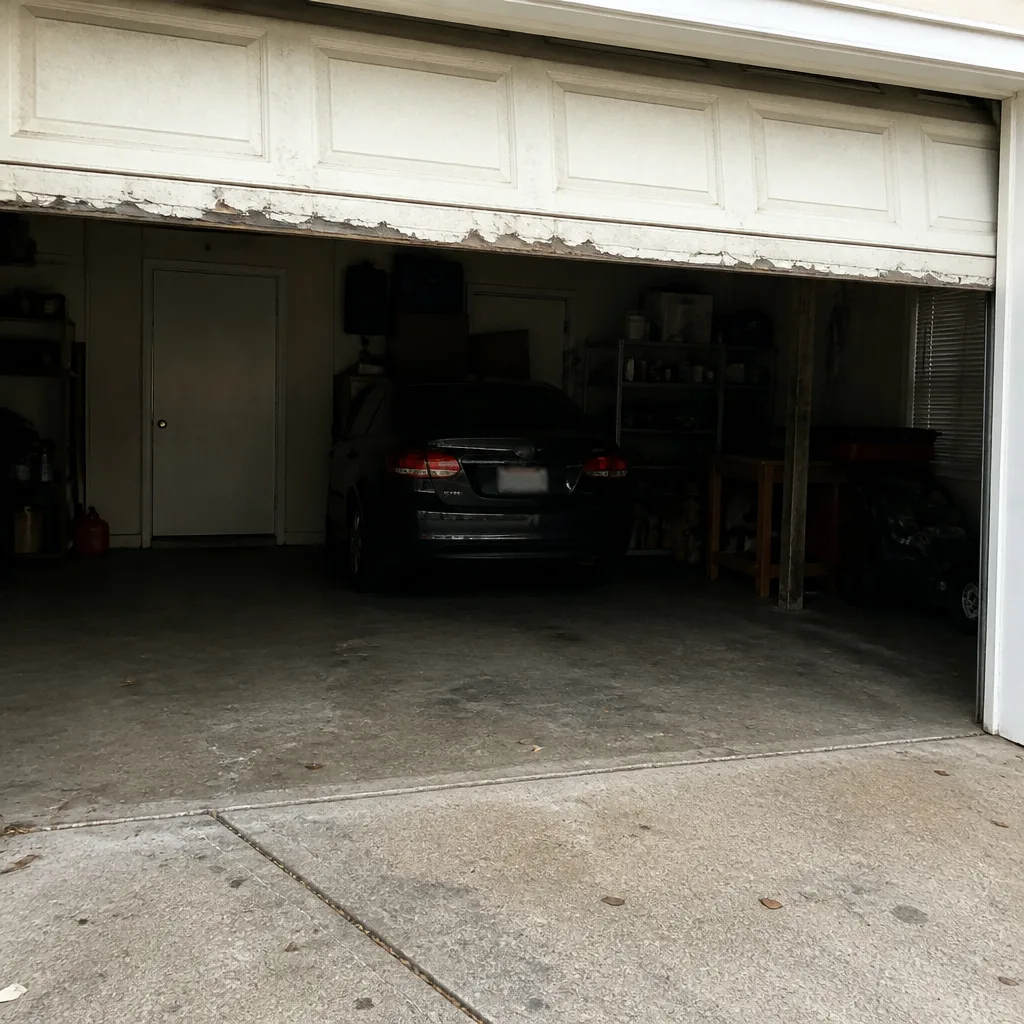 Before
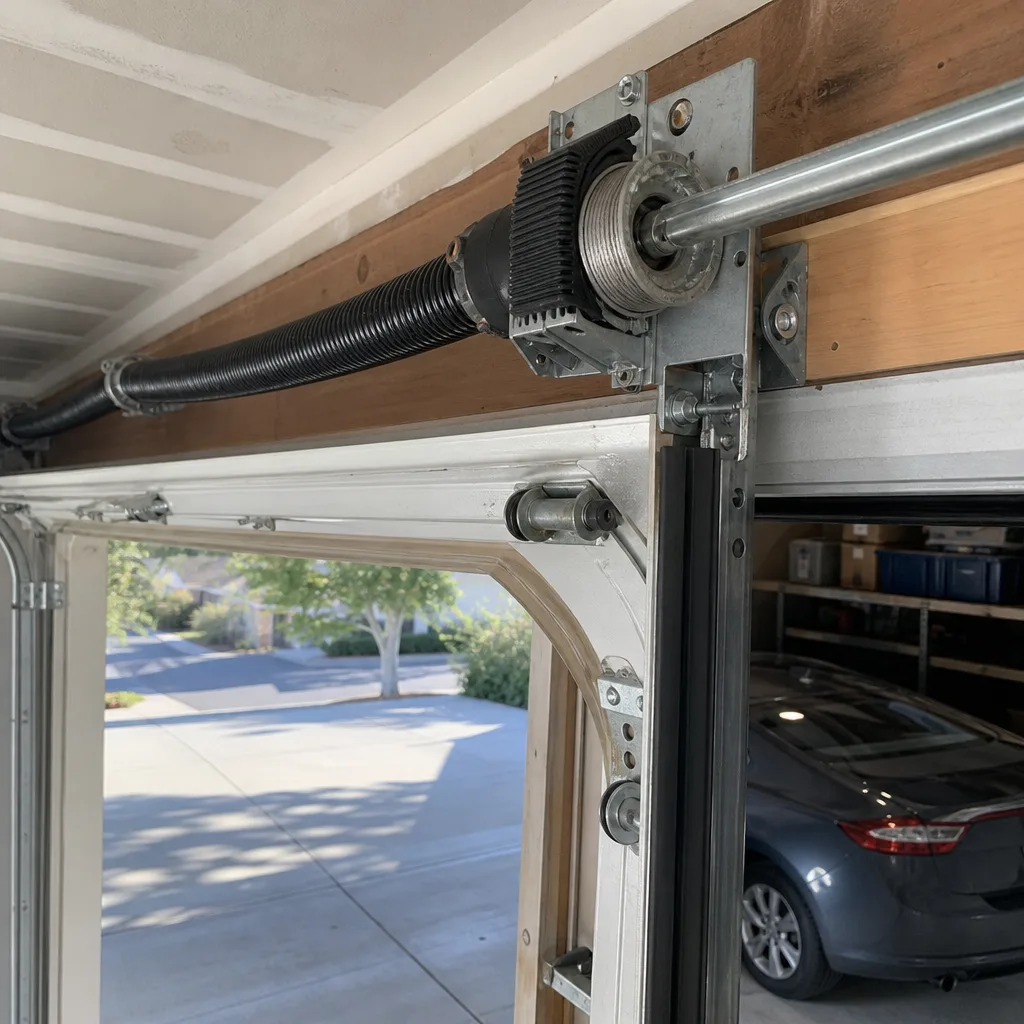 After
After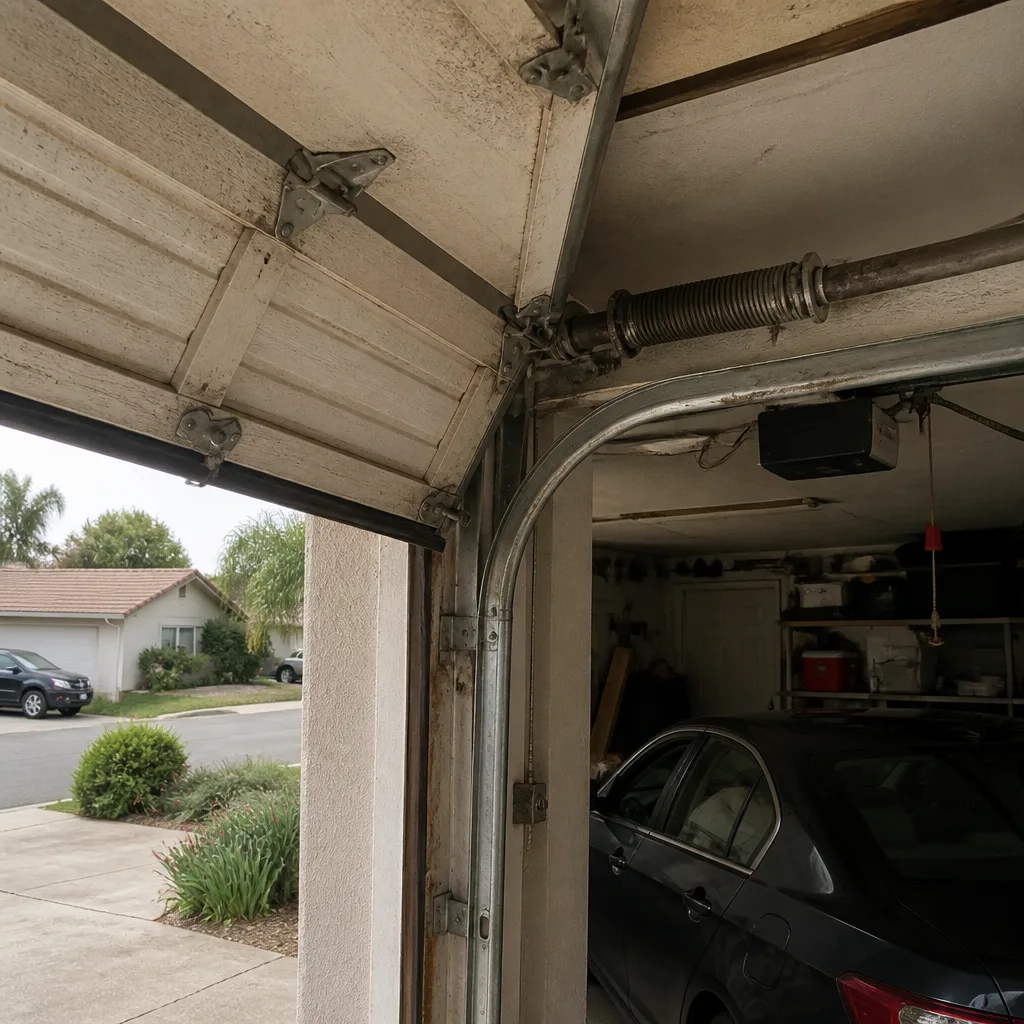 Before
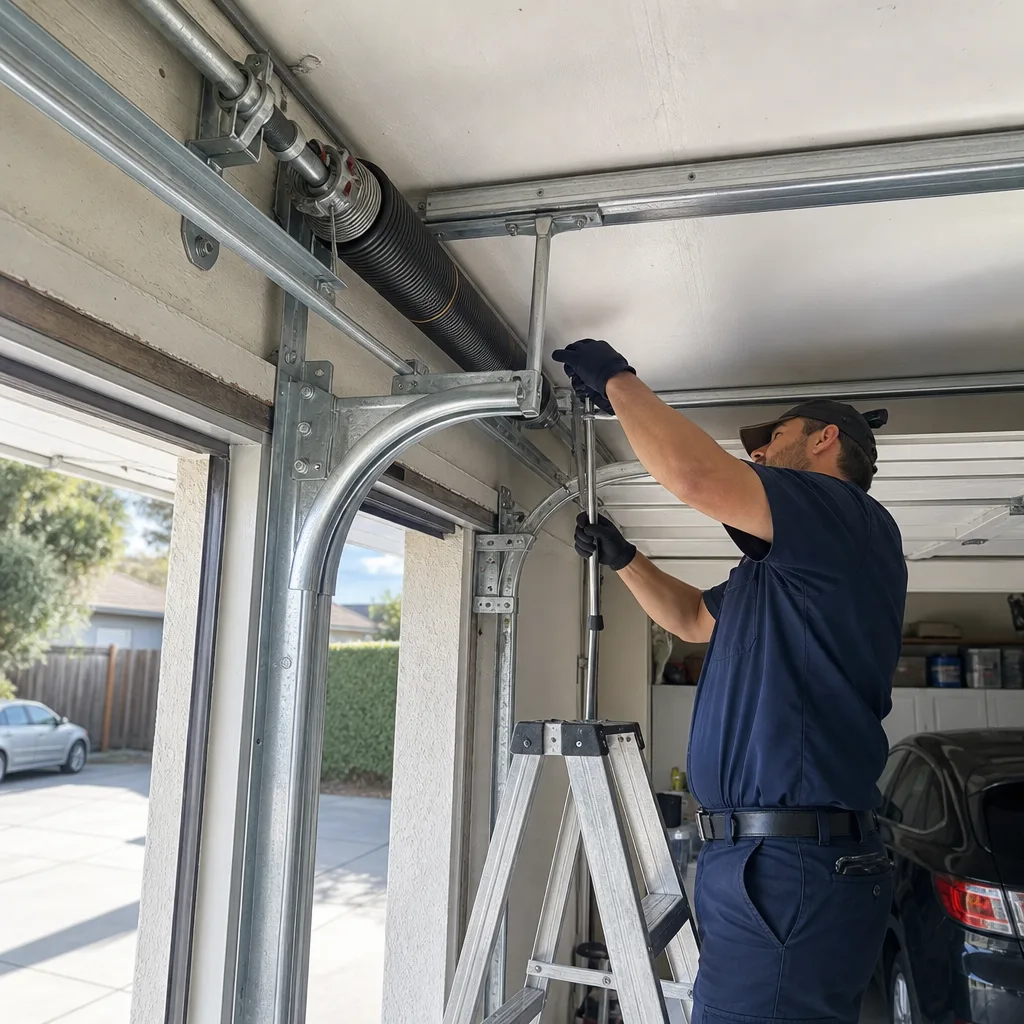 After
AfterGarage Door Warning Signs: A Vista Homeowner’s Reference Guide
A garage door that hesitates for two seconds before moving isn’t being slow. That pause is the opener telling you the spring tension is off and the motor is working three times harder than it should, which means the motor will burn out in weeks, not years. Most Vista homeowners don’t realize their garage door has been warning them for months before it finally quits. This guide walks you through the specific signals, what they mean, which ones mean “fix this weekend,” and which ones mean “park in the driveway and call right now.” For the complete guide to garage door in Vista, including deeper maintenance schedules and part lifespans, see our full resource.
Quick Answer
Garage door warning signs fall into four categories: visual damage you can spot from ten feet away (frayed cables, panel cracks, rust at the spring coils), sounds that identify the failing part (grinding, popping, rhythmic rattling), balance problems you can test yourself in 60 seconds, and opener behavior that flags sensor or mechanical trouble (unexpected reversal, slow response, refusal to close). Most of these warnings mean a fix is needed within days or weeks, but three of them, a snapped cable with visible strands, a door that drops when released, and a reversal that happens without anything in the doorway, mean stop using the door until a trained professional gets there. If you’re in Vista and your door is showing any of these, call (760) 891-5938 and a real person will answer.
Table of Contents
- Visual Signs You Can Spot From Ten Feet Away
- The Sound Dictionary: What Your Door Is Telling You
- The 60-Second Balance Test
- Opener Behavior Red Flags
- The “Safe to Use” Decision Line
- Common Mistakes to Avoid
- When to Call a Professional
- Frequently Asked Questions
Visual Signs You Can Spot From Ten Feet Away
You don’t need a ladder or a tool belt to catch most garage door problems early. In fact, the best inspection method is the one you can do with a cup of coffee in your hand, standing in the driveway where the door gets full morning light, especially during Vista’s clear-sky seasons when the sun hits the east-facing doors on most homes in Shadowridge and Buena Creek. Our seasonal garage door care for Vista breaks down what to check each quarter.
Walk out about ten feet and look at the door straight on. Then walk to each side and look at the track and cable assembly. Here’s what matters:
- Cable fraying. The steel cables on either side of the door should look like smooth, tightly-wound rope. If you see individual strands poking out, especially near the bottom bracket where the cable attaches to the door, that’s a failure in progress. Those cables carry all the spring tension. When one goes, that corner of the door drops instantly, and a 200-pound door comes down unevenly, hard.
- Bottom seal gaps. Crouch down and look along the bottom edge. Daylight should not be visible under the door. In Vista, where cool marine air pushes inland most nights, a deteriorated seal means rodents find their way in, millipedes show up every spring, and your tools rust faster than they should.
- Panel cracks at the hinge points. Look at the horizontal seams between panels, specifically the areas around the metal hinges. Small cracks here spread. Once a crack reaches a hinge mount, the hinge torques under load and the panel starts to bow. That’s when the door starts to “pop” as it moves.
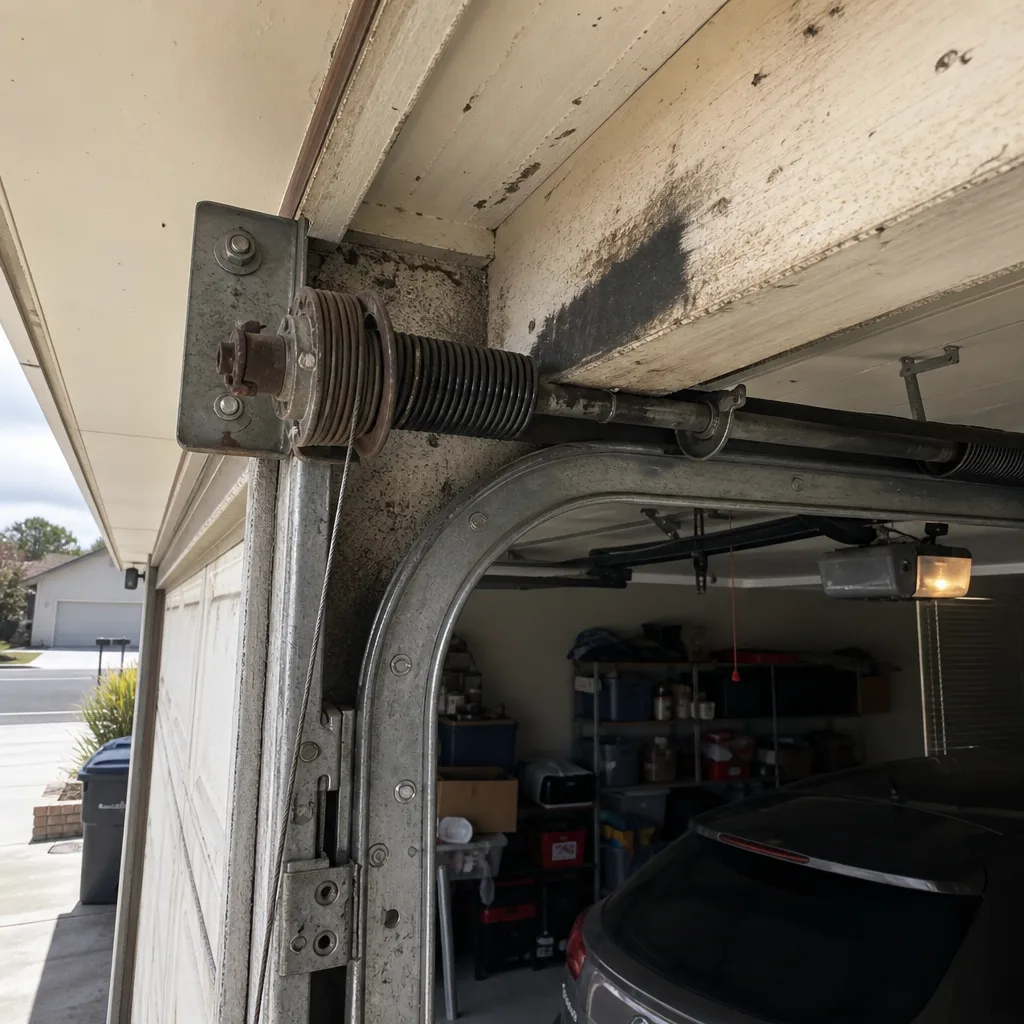
- Rust patterns on the springs. If you have an older door with exposed torsion springs above the opening, look at the coils. Light surface rust is normal after a decade. But if you see deep orange flaking, or rust concentrated on just one or two coils, that indicates moisture is working into the steel at a stress point. Spring failure almost always happens at that rusted coil.
In our experience at Otto’s Garage Door home, the biggest missed warning sign in Vista is cable fraying. Homeowners walk past it every day because it’s small. But small is exactly when you want to catch it: a cable replacement is predictable and inexpensive. A snapped cable is the kind of job that happens at 9:40 on a Tuesday night.
The Sound Dictionary: What Your Door Is Telling You
Garage doors talk. Most homeowners just don’t speak the language. Once you know what each sound corresponds to, you can usually name the failing part without opening anything up.
Here are the five sounds we hear most often on service calls across Vista, from Shadowridge to the properties up by the Vista Valley Country Club, and what each one means:
1. Grinding
Grinding is metal-on-metal contact without proper lubrication or alignment. On a chain-drive opener, it’s usually the chain rubbing the rail because the tensioner has loosened. On belt-drive openers, which are the most common residential units installed by Garage Door Opener professionals in Vista, grinding is usually the motor gear stripping inside the unit. A stripped gear grinds progressively louder over about two weeks, then the opener just clicks and does nothing. If the grinding is coming from the rollers in the track, it means the roller bearings have died and the roller is sliding instead of rolling, which wears the track and shoulders the extra load onto the hinges.
2. Squealing
A high-pitched squeal that follows the door as it moves is usually dry rollers or a dry bearing. In a mild climate like Vista’s, homeowners forget that metal parts still need grease twice a year. But even a squeal that seems harmless is adding friction. That friction works the opener motor harder, and on a humid morning after years of neglect, the roller shafts can seize entirely.
3. Popping
Popping sounds, sometimes described as a sharp “crack” at one specific point in the travel, are energy releasing from a part under tension. It’s usually a hinge twisting because a panel is binding, or a cable catching on a rough spot on the drum. Left alone, popping becomes a break. When we hear “my door pops right at the halfway point,” our team starts looking at hinges and drums before anything else.
4. Rhythmic Rattling
A steady rattle that keeps time with the door movement is normally loose hardware: bolts that have backed out of the hinges, or a loose track bracket tapping against the door framing. This one is the easiest to ignore and the easiest to fix, but long-term rattling enlarges the bolt holes, and then the fix becomes welding or track replacement.
5. A Single Loud Bang During Operation
One bang, not repeated, is usually a spring failing under load. If you hear it and the door still moves, stop using the door anyway. The other spring is now carrying the entire load, which shortens its life to a matter of days or weeks. We’ve lost count of the Vista customers who “kept using the door for a while after that loud noise” and then watched the cable snap and the door crash down.
The 60-Second Balance Test
This is the single most useful thing a homeowner can learn about their garage door, and you can do it right now without any tools. Here are the steps:
- Close the door completely.
- Pull the red emergency release cord hanging from the opener rail. This disconnects the door from the opener carriage. You’ll hear it click.
- Lift the door by the handle until it’s about waist height, around three feet off the ground.
- Let go.
Now watch what happens. A properly balanced door stays right where you left it: it doesn’t drift up, and it doesn’t sink down. It just hangs there, because the springs are doing exactly what they should be doing, holding the full weight of that door in tension.
If the door sinks toward the floor, the springs are losing tension. If it’s a slow sink, you’re down to maybe 20 to 30 percent of the original spring life. If it drops faster than a drifting feather, the spring is essentially spent. If the door flies upward, someone put the wrong springs on at some point, or the temperature shift, which Vista does get, from a hot inland afternoon to a cold marine layer night, is working against a spring that was never rated for the door’s actual weight.
We count spring cycles the way you count tire miles. A standard torsion spring is rated for about 10,000 cycles, which for a family that uses the door four times a day works out to somewhere around seven years. But that’s a national average. In a place like Vista where many homes were built in the 1970s through the 1990s and have original doors, the springs are often at or past that rating. If you want an honest answer about what’s left on yours, there’s a Garage Door Repair in Vista technician who will tell you in plain numbers.
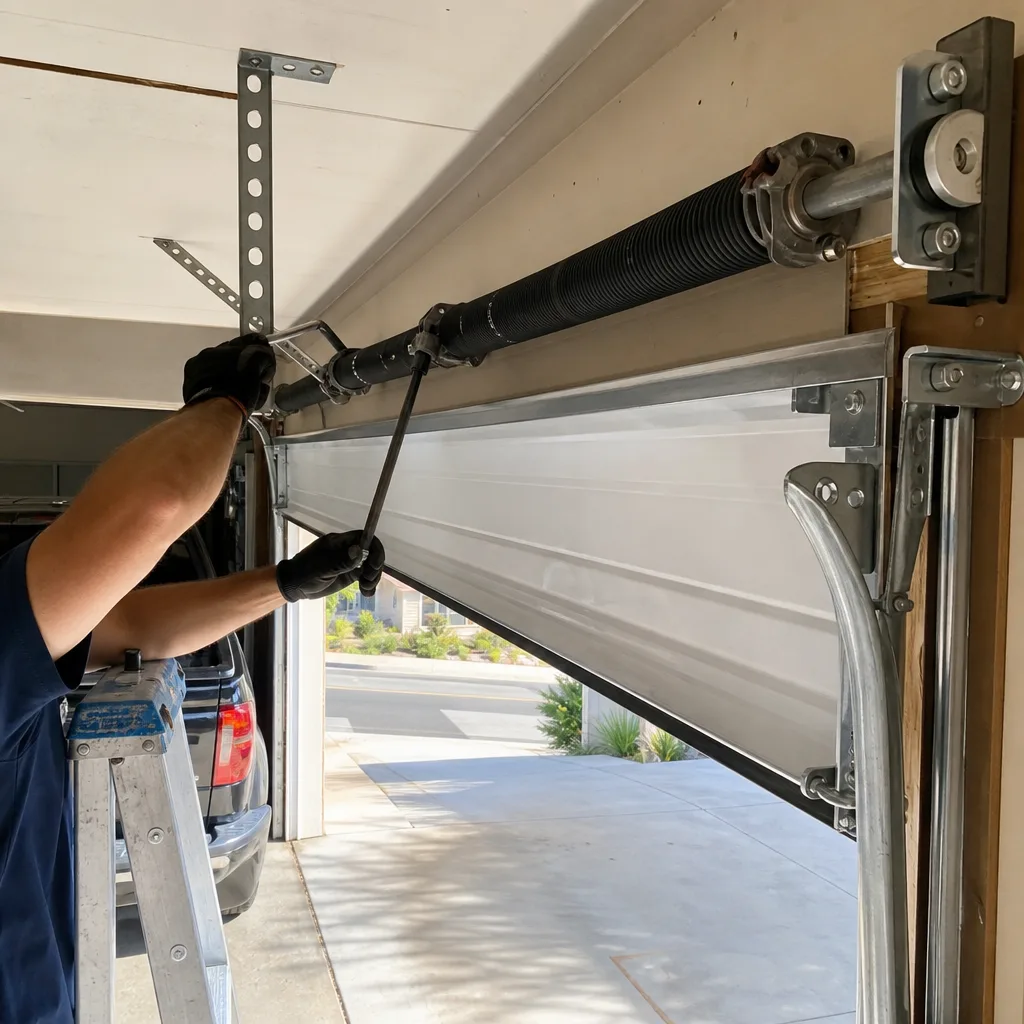
Do not attempt to re-tension, replace, or adjust springs yourself. Torsion springs carry hundreds of pounds of stored force. The winding bars, the set screws, the sequence of quarter-turns, every part of that process can put a grown adult in the emergency room. A door is 200 pounds riding on two springs. Respect it.
Opener Behavior Red Flags
Openers are the component homeowners blame first and the component that’s usually innocent. If the opener is straining, the problem is almost never the opener. The motor is the messenger. Here’s what specific behaviors actually mean:
Door Reverses Unexpectedly
A door that starts closing, then reverses back up without any visible obstruction, is doing one of two things. Either the safety sensors near the floor have drifted out of alignment, or they’re seeing something, a leaf, a tennis ball, a spider web across the lens, that’s breaking the infrared beam. The sun angle matters in Vista, especially on west-facing doors in the late afternoon, when the low sun can blind a sensor and make the door reverse continuously. The fix is usually a quick realignment, but if the sensor lenses are old and cloudy, replacement is the more permanent answer.
Door Won’t Close Fully
When the door stops an inch or two shy of the floor and reverses, it’s often the close-force setting on the opener. Over time, as springs weaken, the opener detects more resistance and trips its own safety. Homeowners then adjust the force limit to push through, which works for a while until it doesn’t. The real fix is spring replacement, not force adjustment. If the door traveled fine last week and suddenly won’t close today, check for anything in the track first, then check the sensors. If both are clear, the motor RPM sensor may have failed.
Slow Response to the Remote
A delay between pressing the button and the opener responding is almost always a signal problem, not a motor problem. It could be the remote battery dying, the logic board in the opener getting flaky, or interference from LED bulbs in the opener unit itself. Yes, LED bulbs, particularly the bargain-bin ones, put out electromagnetic noise that can garble the receiver. If the door responds instantly to the wall-mounted button but slowly to the remote, swap the remote battery first. If it’s slow from both, the logic board is the likely culprit.
The Opener Runs But the Door Doesn’t Move
This is the stripped gear or disconnected carriage scenario. Pull the emergency release and try lifting the door manually. If it moves smoothly by hand, the door is fine and the opener’s internal gearing has failed. If the door is heavy or binds when you lift it manually, you have a door problem, and the opener was just the part that gave up trying.
The “Safe to Use” Decision Line
Here’s the no-guessing rule. If you’re not sure whether your door is safe to keep using, run it through this list. Any “yes” means park in the driveway until a technician has looked at it.
- Can you see individual strands on either cable? Yes means don’t use the door. That cable is now carrying its load on a fraction of its original steel.
- Did the door make a loud bang and then keep working? Yes means don’t use the door. A spring has failed or partially failed, and the remaining spring is now overloaded.
- Does the door drop more than a foot when you do the balance test? Yes means don’t use the door. The door’s effective weight is now mostly uncontrolled, and the opener brake is the only thing holding it up in normal operation.
- Does the door reverse without anything visible in the doorway? That one is actually safe to use in manual mode, but don’t leave it in a partially open state, and don’t use the remote close as your only method.
- Is there a visible gap between the track and the wall, or between the track and the door rollers? That’s a derail waiting to happen. Don’t use the door.
When in doubt, the cost of a service call is less than the cost of a crushed car, a broken arm, or a door off its track at 10 p.m. on a Sunday. If you’re a Vista homeowner reading this at midnight with a door that won’t close, call (760) 891-5938. A live person answers, and we quote on that call and hold the number when we show up.
Common Mistakes to Avoid
- Lubricating your way past a spring problem. Spraying WD-40 on a door that’s struggling is like putting a band-aid on a broken leg. The squeak goes quiet for a few days, then the underlying problem, usually spring tension or roller failure, gets worse. Use white lithium grease on moving metal parts twice a year, but don’t confuse lubrication with repair.
- Ignoring the “bang” because the door still works. We still take calls in Vista where the homeowner says “it made that noise six months ago and it’s worked fine until now.” It was never fine. It was running on one spring and burning through the motor in silence.
- Replacing the opener when the springs are the problem. This is the most expensive mistake on this list. A new opener on a door with dead springs will do the same thing the old one did, strain and fail, and now you’ve paid for an opener and you still need springs. If the opener is working but struggling, have the springs checked before spending a dollar on a new motor.
- Adjusting the force settings yourself. The little adjustment dials on the opener are not meant to compensate for a door that’s gotten heavy. Cranking up the force is how a door that used to reverse on a toy truck starts crushing it instead.
- Trying to fix a snapped cable yourself. We say this over and over: cables handle the full tension of the spring system. A cable under tension, even partly slack, can cut like a blade when it comes loose. Do not attempt to wind, unwind, or replace cables on your own.
- Putting off a bottom seal replacement. In Vista’s climate, an unsealed bottom edge is an open invitation. Rodents in the fall, bugs in the spring, and utility bill creep all year. It’s a $30 part and 20 minutes of work.
When to Call a Professional
Any of the red-flag items from the decision line above means call a professional. So does any spring replacement, any cable repair, any track realignment, and any opener replacement where the new unit needs to be matched to the existing door. These are not DIY jobs, and the cost of a mistake is measured in hospital bills, not dollars saved.
For Vista homeowners, we offer a free second opinion on any written estimate, which means you can get another company’s quote and then call us before you sign. We’ve been in this county since 2004, the name on the van is the same name on the invoice and the license, and every job carries a 90-Day Done Right Promise in writing. If it’s not done right, we make it right. One call, no runaround. Garage Door Installation in Vista and repair estimates are free. Call (760) 891-5938.
Frequently Asked Questions
Garage door repair in Vista typically ranges from $125 to $400 depending on the part and the age of the door. A simple sensor realignment or roller replacement sits at the low end. A torsion spring replacement runs $180 to $340 including the spring, which is the single most common repair we do. A full cable replacement with new bottom brackets is $150 to $300. If the door itself needs panel replacement, costs rise quickly. Every price we quote is on the call and held when we arrive, no exceptions. Call (760) 891-5938 for a free estimate on your specific door.
Yes. We run emergency service across Vista every day, and a live person answers around the clock. If your door is stuck open and your vehicle is trapped inside, that’s an emergency, and we prioritize those calls. We quote on the phone and hold the number at the door, so you’ll know the cost before we arrive and it will not change when we get there. Call (760) 891-5938.
No, and that’s not a marketing promise, it’s how we’ve operated since 2004. When you call, we ask about the door type, the brand, the symptoms, and we give you a price. That price is the price. If we find additional problems once we’re there, we explain them, show you the parts, and get your approval before spending another dollar. Nothing is added to an invoice without your sign-off. We’ve repaired garage doors all over Vista on that handshake, and the handshake has held.
For the vast majority of repairs, yes. Our trucks carry torsion and extension springs in a full range of sizes, cables, rollers, hinges, sensors, remotes, and openers across LiftMaster, Chamberlain, and Genie lines. If we need a specific Raynor panel or a custom-sized door section, that’s ordered and we’ll give you a timeframe before leaving. But the common failures, broken spring, snapped cable, dead opener, those get fixed on the first trip.
Most springs are rated for 10,000 cycles, which for a family using the door three or four times a day works out to roughly seven to ten years. That number varies with use frequency, door weight, and maintenance. A door that gets opened once a day for a single car might see fifteen years. A busy household with four drivers might be replacing springs every five years. If you don’t know when your springs were last replaced, do the 60-second balance test and you’ll get a pretty clear answer.
It depends on the noise. Squealing or rattling can be a maintenance item you address this week. Grinding, popping, or any sound that is new, sharp, and comes with visible movement problems is a reason to stop using the door today. A homeowner can’t always tell which is which by ear, so if you’re unsure, describe the sound over the phone and we’ll tell you honestly whether it can wait or whether we should come now. Call (760) 891-5938 and you’ll talk to someone who actually fixes doors, not a script.
The Bottom Line
Garage doors don’t fail silently. The cable frays a little more each week. The spring loses another turn of tension. The hinge pulls a millimeter further out of alignment. The opener works a little harder and gets a little hotter. The warnings are all there, and the homeowners who learn to read them are the ones who never get stuck with a door half-open and a car sealed inside. The balance test takes sixty seconds. The visual check takes ten feet of distance. The sound dictionary just takes listening. Do those three things a few times a year, and you’ll catch the failure while it’s still a $200 repair instead of a $900 rebuild. And if you’re not sure what you’re seeing or hearing, you call. We answer. Same as it’s been since 2004 in Vista.
Written by Otto Reinhardt, Owner at Otto’s Garage Door, serving Vista since 2004.