
Full 25-point door and opener safety check with every visit - springs, cables, rollers, tracks, and your LiftMaster or Chamberlain opener included
You get a price before we start. It does not change when the truck arrives.
 Before
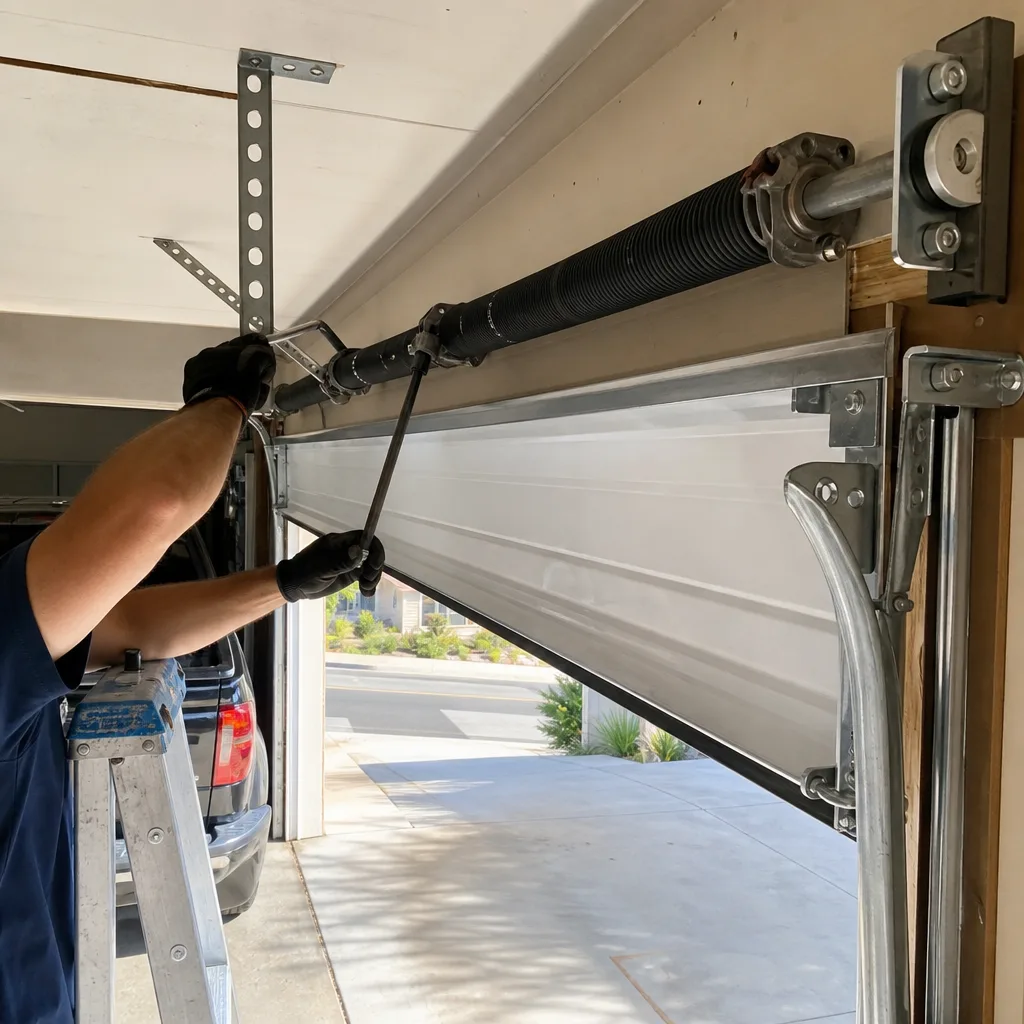 After
After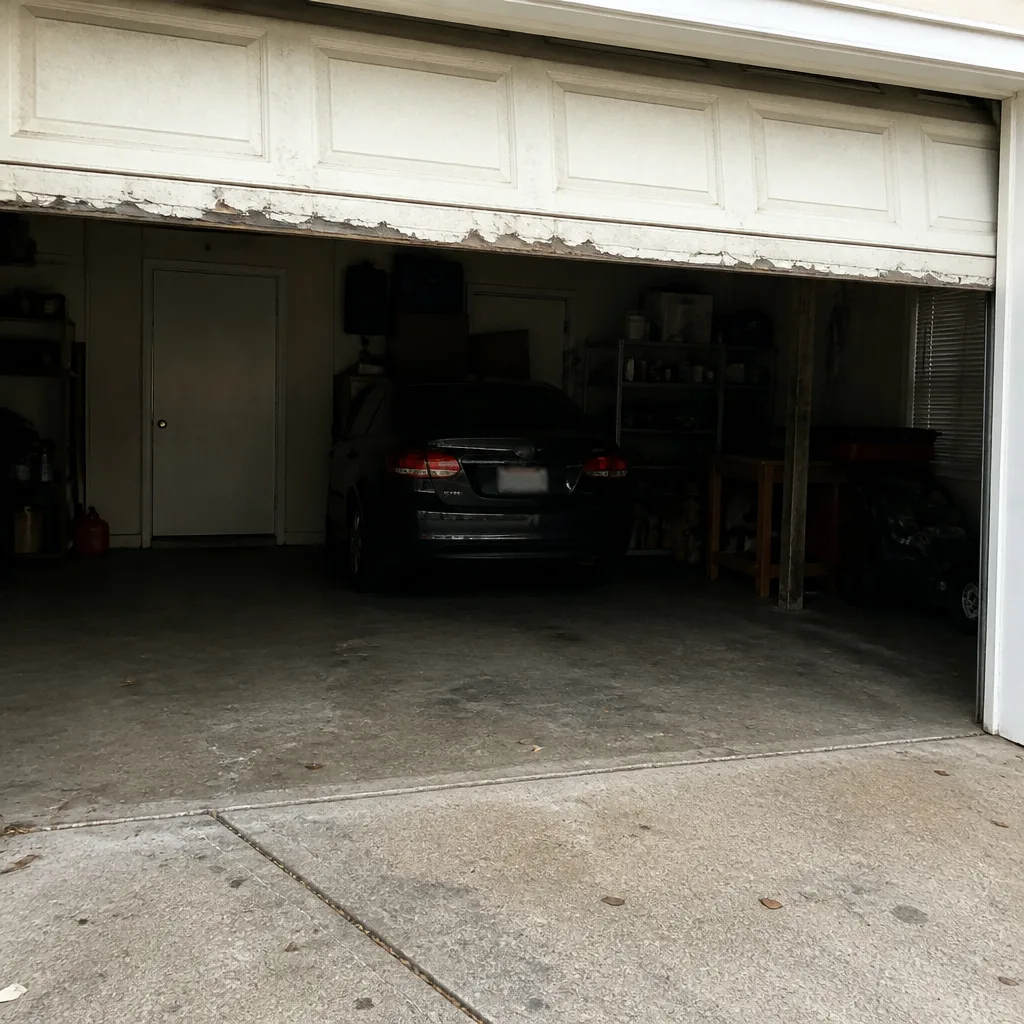 Before
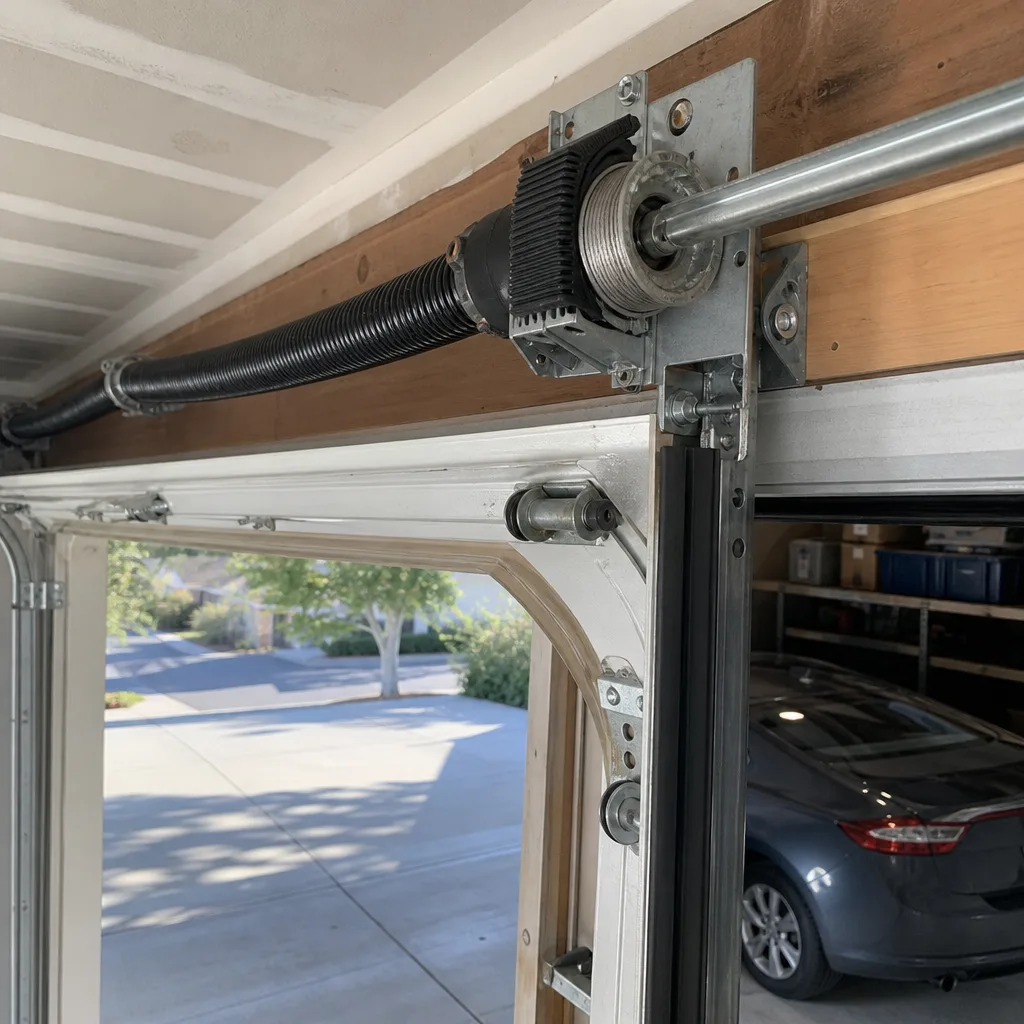 After
After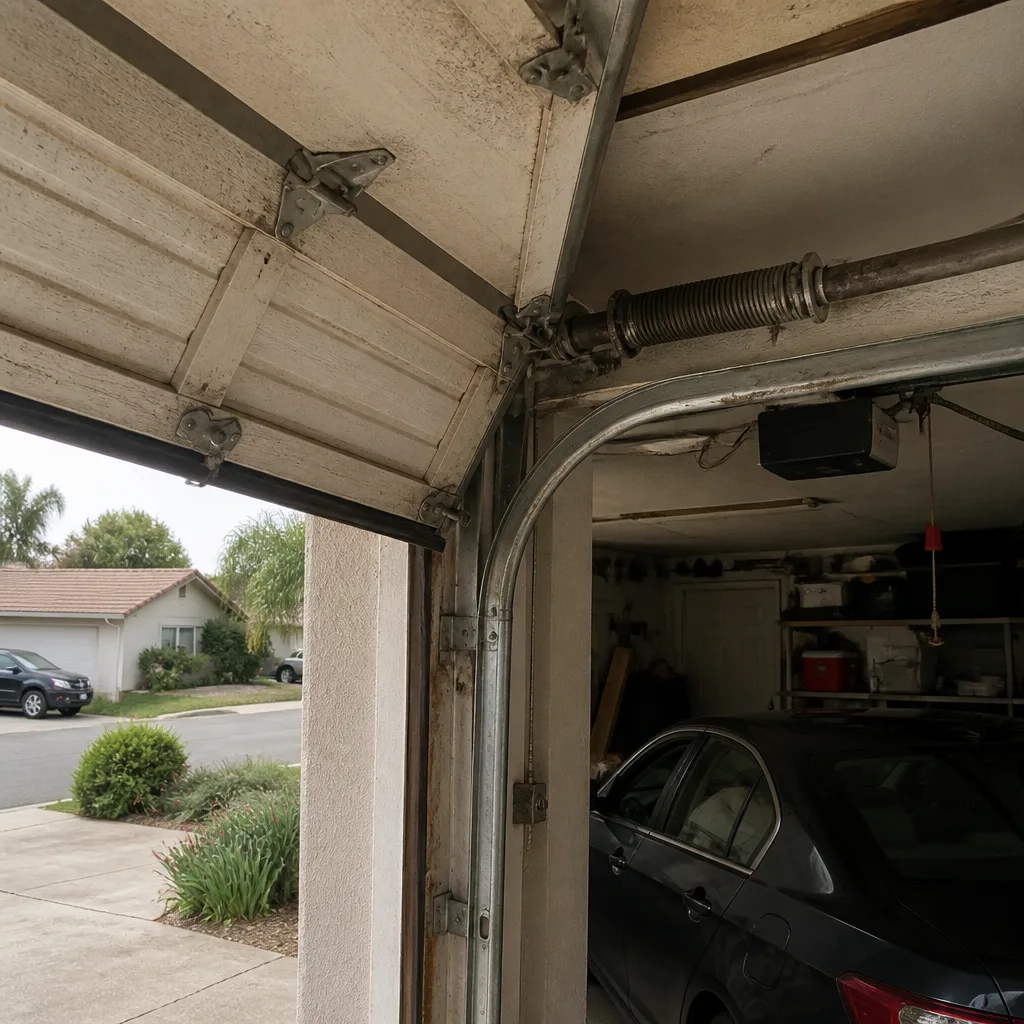 Before
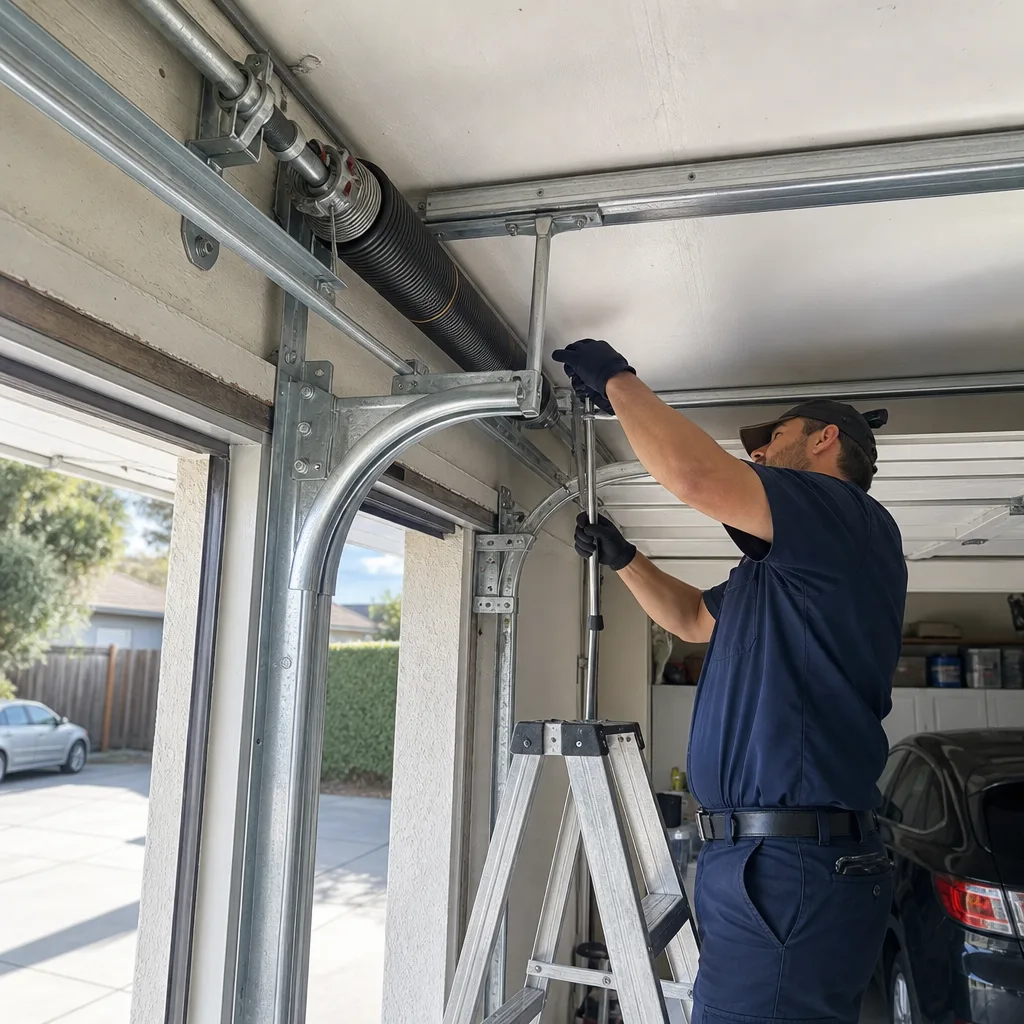 After
AfterCraftsman Torsion Spring Replacement: The Vista Owner’s Guide
We stock and install Craftsman-compatible torsion springs across Vista, and a typical replacement runs $180-$340 installed, parts and labor included. Most jobs are done same-day because we carry a full range of spring sizes on the truck. The way most Vista homeowners find out their Craftsman torsion spring has failed is simple: they hit the opener button, hear the motor run, and the door doesn’t budge. Or they’re standing in the garage and hear a sound like a rifle shot. That’s the spring letting go, and yes, it’s dramatic.
A Craftsman door isn’t special because of who made the spring. It’s special because the spring was spec’d for that specific door weight, height, and cable drum. Get the sizing wrong and you’re not just out the cost of a spring. You’re putting 200 pounds of door on a part that isn’t rated for it, which means the opener strains, the cables chew up, and you’ll be calling us again in a year. Otto Reinhardt has been swapping Craftsman torsion springs in Vista since 2004, and we’ve seen every failure mode there is. The fix is straightforward when the spring is matched correctly. The trick is knowing how to match it.
We’re an independent shop in Vista, not affiliated with Craftsman. We stock OEM-spec and quality aftermarket springs and we’ll tell you which makes sense for your door, not which one pays better.
Which Craftsman Models This Applies To
Craftsman garage doors were manufactured under contract for Sears, mostly by Chamberlain and Wayne Dalton, which means the torsion spring setup follows one of two standards depending on the era of your door. If your Craftsman door was installed before roughly 2000, you’re likely looking at a standard residential torsion assembly with 1-inch or 1-1/4-inch inside-diameter springs. Doors from the last twenty years run the same sizes, but the wire diameter and spring length vary depending on door weight and height. The model number on the door sticker matters less than the three measurements that actually identify the right spring: wire gauge, inside diameter, and overall length. Also check the winding cone color, but don’t trust it alone. We’ve seen red-cone springs on doors that spec out to green, because a previous tech grabbed what was on the truck.
One compatibility gotcha specific to Craftsman: the older Sears-installed doors in Vista neighborhoods like Shadowridge and the older tracts near the 78 off Melrose often used 1-inch ID springs with unbranded bearing plates. Some aftermarket spring kits are drilled for standard 1-inch shafts, but the bearing plates can be slightly undersized, which causes binding mid-cycle. We’ve had to re-do jobs where a homeowner bought a spring online and the door shimmied because the cone didn’t seat cleanly. When you call us, we ask the right questions up front so the right parts land on the truck the first time.
If you’re deciding between an OEM Craftsman-labelled spring and a quality aftermarket equivalent, here’s the straight answer: Craftsman doesn’t make springs, they badge them. The OEM part is usually a Chamberlain or Wayne Dalton spring with a Craftsman label and a markup. The aftermarket springs we use come from the same factories that supply the door manufacturers, with the same cycle ratings and the same wire specs. What actually matters is matching the spring to the door weight and cycle rating, then winding it correctly. We carry both paths and we’ll quote you the difference. For most Vista homes, the aftermarket equivalent performs identically at a lower price, and our 90-Day Done Right Promise covers either one.
Signs Your Craftsman Torsion Spring Replacement Is Failing
- The door opens a foot or two, then stops. This is the classic sign of a spring that’s lost tension or broken clean through. The opener is designed to move a balanced door, not to dead-lift 200 pounds. If it’s struggling, the spring has already lost cycles.
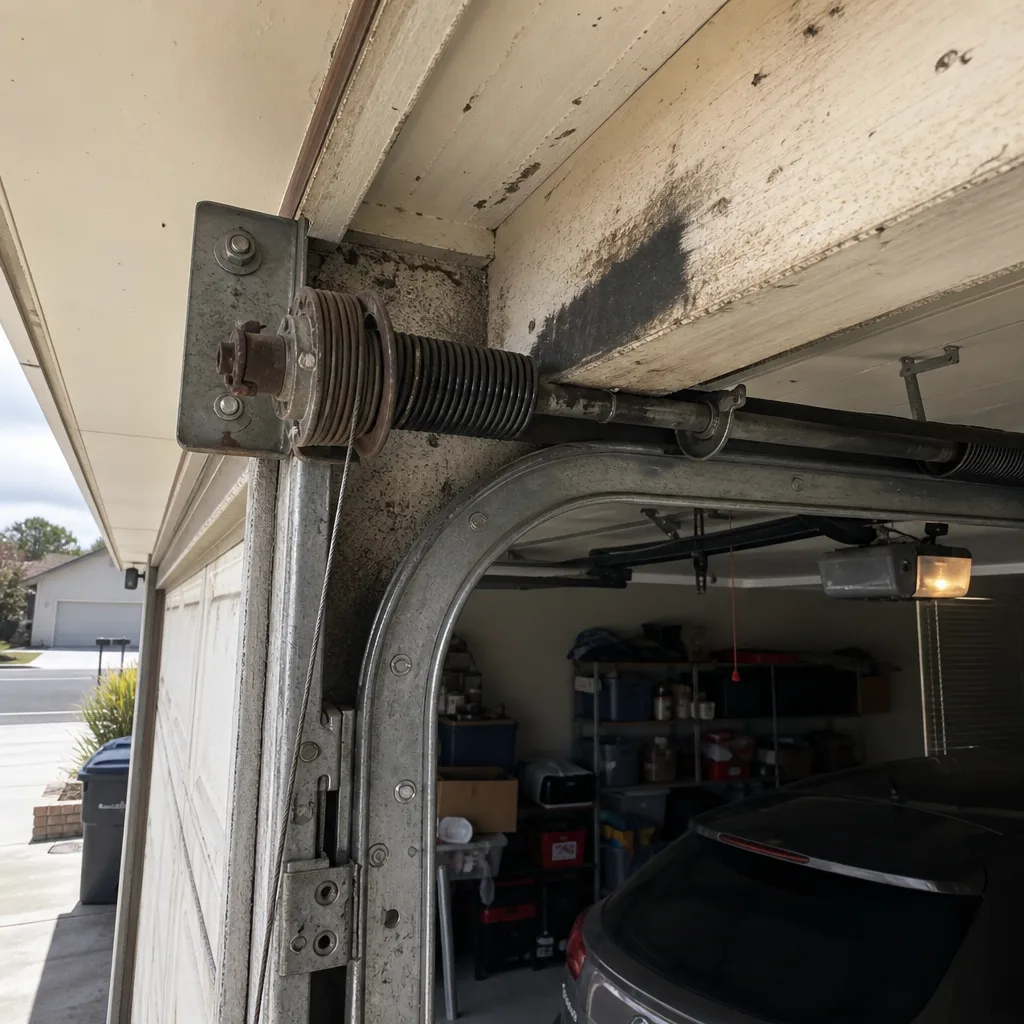
- You see a gap in the spring coil. When a torsion spring breaks, the coil separates, usually about a quarter-inch to half-inch, right where the stress concentrates. Look up at the shaft above the closed door. If the coil isn’t one continuous piece, it’s done.
- The door feels unusually heavy when you pull the release handle and lift it manually. A healthy spring makes a Craftsman door feel like it weighs 10 to 15 pounds. If it takes real muscle or the door wants to slam back down, the spring is no longer doing its job.
- The cables are loose or dangling. When the torsion spring breaks, the lift cables lose tension instantly because the shaft isn’t loaded. If you see slack cable hanging off the drum on either side of the door, stop using the opener immediately.
- The opener runs but the door stays put, with a grinding or ratcheting noise. The trolley is moving without the counterbalance the spring supplies. This burns out carriage teeth and strips gears fast. The opener isn’t the problem; the spring is.
Replacement Cost & What’s Included
A Craftsman torsion spring replacement in Vista runs $180-$340 installed, and that price includes the spring or springs, all winding and balancing work, a full safety inspection of the cables, drums, and rollers, and our 90-Day Done Right Promise in writing. The range depends on three things: how many springs your door has, what wire gauge and length it calls for, and whether the spring is the original or a previous replacement that we need to re-match. A single-spring setup on a standard 8-foot-wide Craftsman door lands at the lower end. A two-spring system on a heavier door, like the custom units you see up around Brengle Terrace Park, lands higher because there’s twice the part and twice the winding time.
Here’s the transparency on pricing: on a two-spring door, both springs get replaced together. Replacing only the broken one means the old spring is still fatigued and you’ll pay for another service call when it snaps. We quote the full job on the phone, including both springs if that’s what the door needs, and that number does not change between the phone and the driveway. You’ll see the price before we touch a bolt, and the total is written down before you approve anything.
DIY or Call Us?
You can inspect your Craftsman spring safely. Stand inside the closed garage, look up at the shaft, and check for a visible coil gap, rust flakes on the floor, or a loose cable. That’s good information for the phone call. What you should not do is wind, unwind, or replace a torsion spring yourself. These springs hold anywhere from 90 to 180 pounds of torque per spring, and that energy has to go somewhere when the spring fails or the winding bar slips. We’ve repaired doors after DIY attempts in Vista where the homeowner was lucky enough to only damage the door. Not everyone gets lucky. A door is 200 pounds riding on two springs. Respect it.
The winding and unwinding process requires specific bars, the right spring sizes, and a feel for how much tension the door needs that you only get from doing hundreds of these. One wrong move and you’re looking at a broken wrist, a shattered winding cone, or a door that comes off the track with you under it. Call us at (760) 891-5938 instead. We’ll have the right spring on the truck and the job done before you’d finish reading a spring-replacement guide online.
FAQs
A Craftsman torsion spring typically lasts 8,000 to 15,000 cycles, which in a Vista garage averages out to about 8 to 12 years depending on how often you open the door and whether the spring was rated for your door’s weight when it was originally installed. Coastal air from the ocean side of Vista can accelerate rust on uncoated springs, cutting lifespan by a few years in homes closer to Oceanside’s marine layer. We count spring cycles the way you count tire miles, and we can tell you what’s left on your spring during a service call. Call (760) 891-5938 for an inspection.
No. A torsion spring that has snapped cannot be welded, re-tensioned, or “patched,” because the steel has already failed at its stress point and any repair attempt leaves a weakened spring holding hundreds of pounds of torque. Replacement is the only safe option, and on a two-spring door we always replace both at the same time. It’s the same money long-term, because the second spring is already fatigued and will fail soon.
For a standard single Craftsman torsion spring, the swap takes about 45 to 90 minutes start to finish, including winding, balancing, and a full safety check on the cables and rollers. If you’re close to our shop in Vista, same-day availability is common, and a live person answers the phone 24/7 to quote the job. Call (760) 891-5938 and we’ll tell you if we can be there today.
Yes. Our trucks carry the spring sizes that fit the vast majority of Craftsman doors in Vista, including the older Sears-installed units and the newer Chamberlain-built models, along with parts we need for LiftMaster, Genie, and Chamberlain openers. If your door needs a spring outside our stock range, we source it same-day from our local suppliers and schedule the install to fit your day. We’ll tell you the situation straight on the phone, not after you’ve waited around.
Call Otto’s Garage Door for Craftsman Torsion Spring Replacement in Vista
If your Craftsman spring is broken or showing wear, don’t run the opener and don’t try to nurse it along. Call (760) 891-5938 and you’ll get a live person, not a voicemail tree. We’ll ask about your door, quote the job on the phone, and show up with the right springs already on the truck. The name on the van is the same name on the invoice and the same name on the license. That’s been true since 2004, and it’s not changing. We’ll tell you what it needs. Not what pays better.
Written by Otto Reinhardt, Owner, Otto’s Garage Door - Vista, CA at Otto’s Garage Door, serving Vista and nearby areas.