
Last updated September 10, 2026
Full 25-point door and opener safety check with every visit - springs, cables, rollers, tracks, and your LiftMaster or Chamberlain opener included
You get a price before we start. It does not change when the truck arrives.
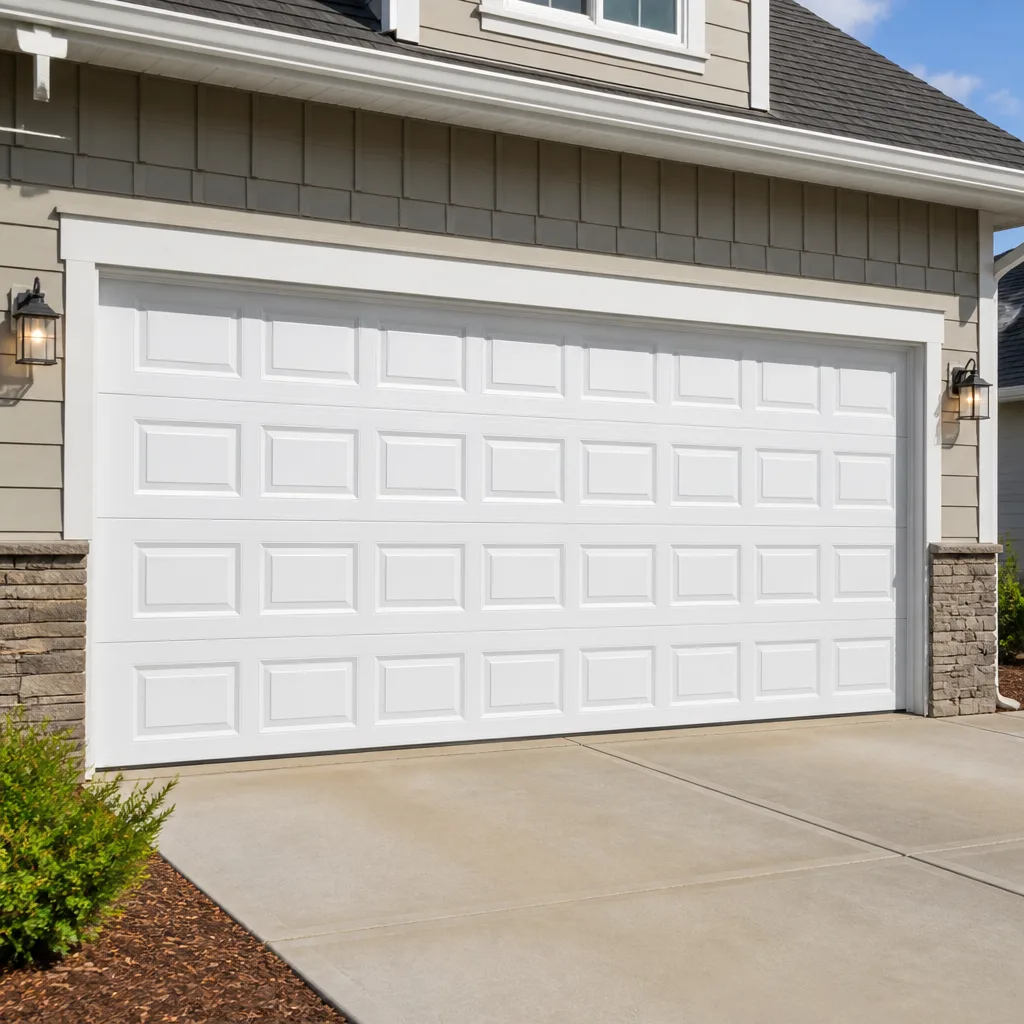
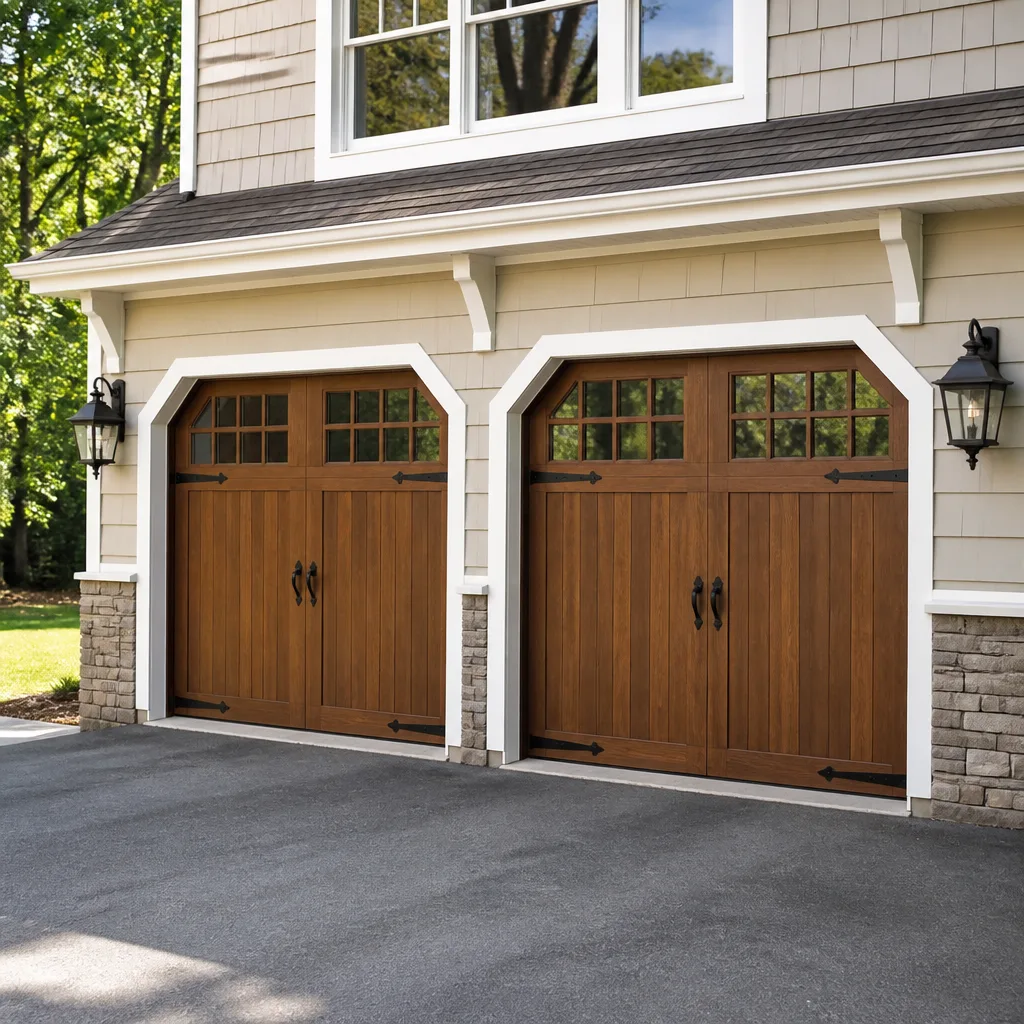
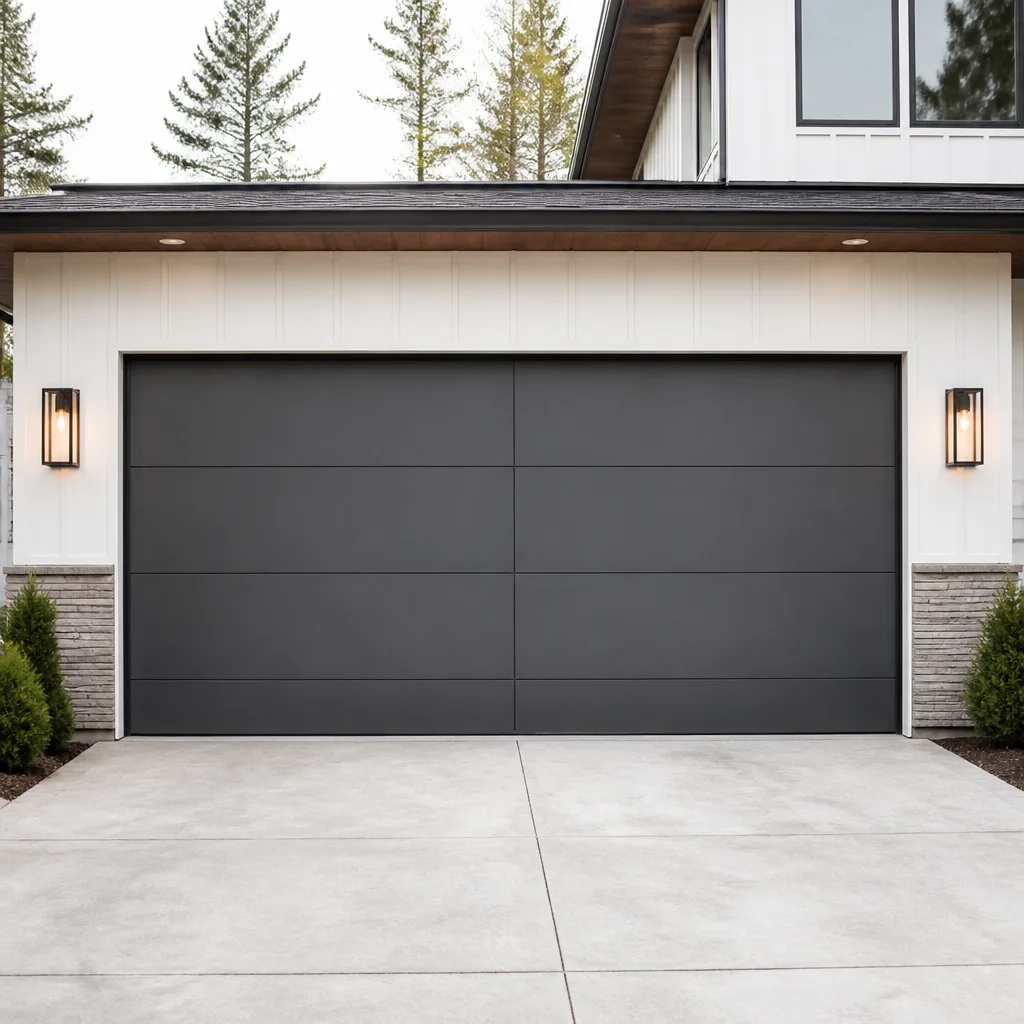
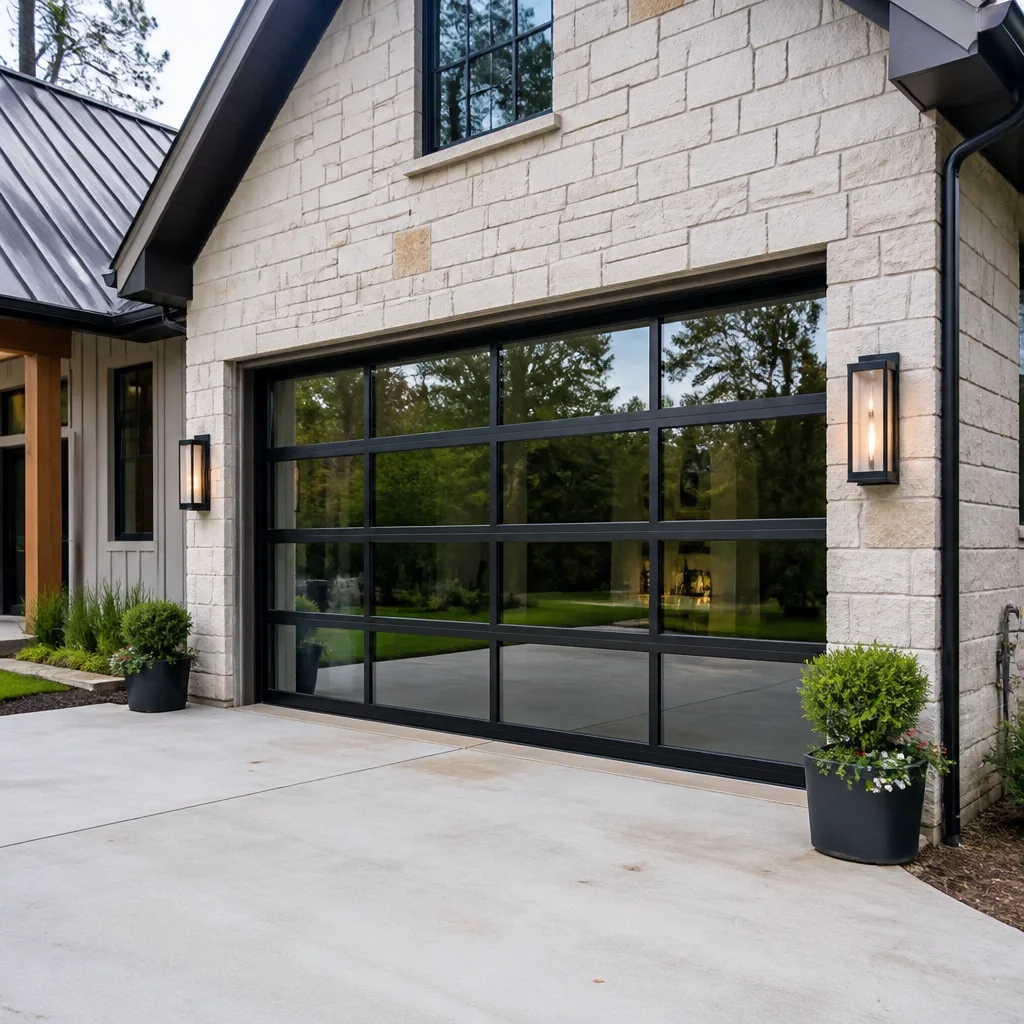
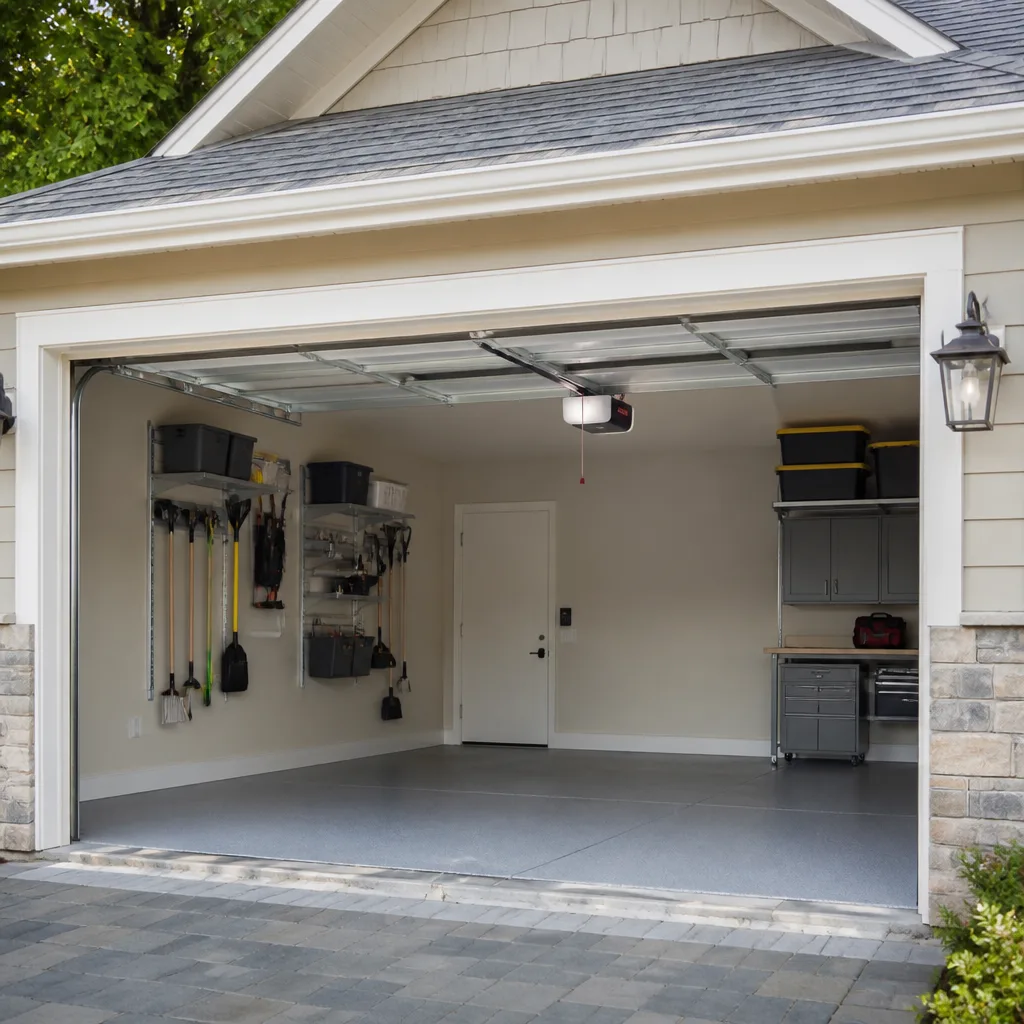
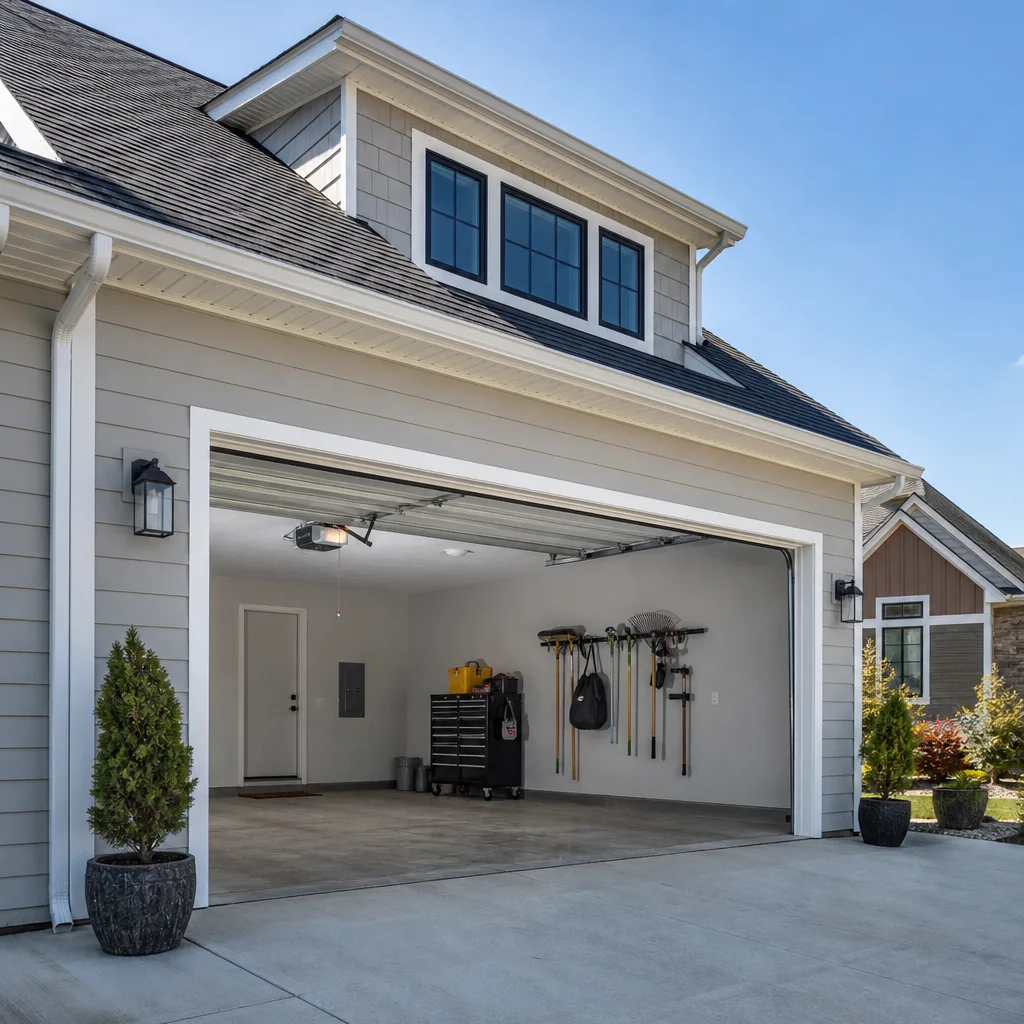
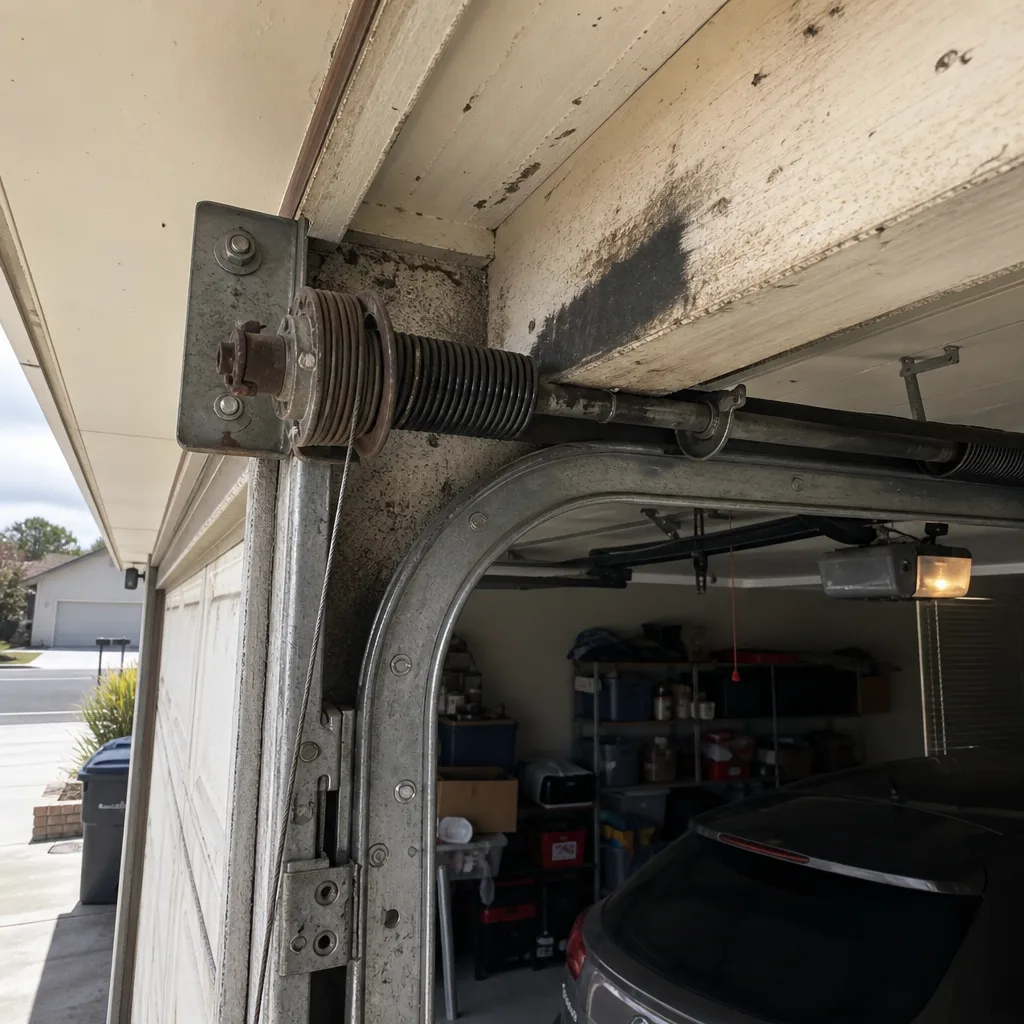 Before
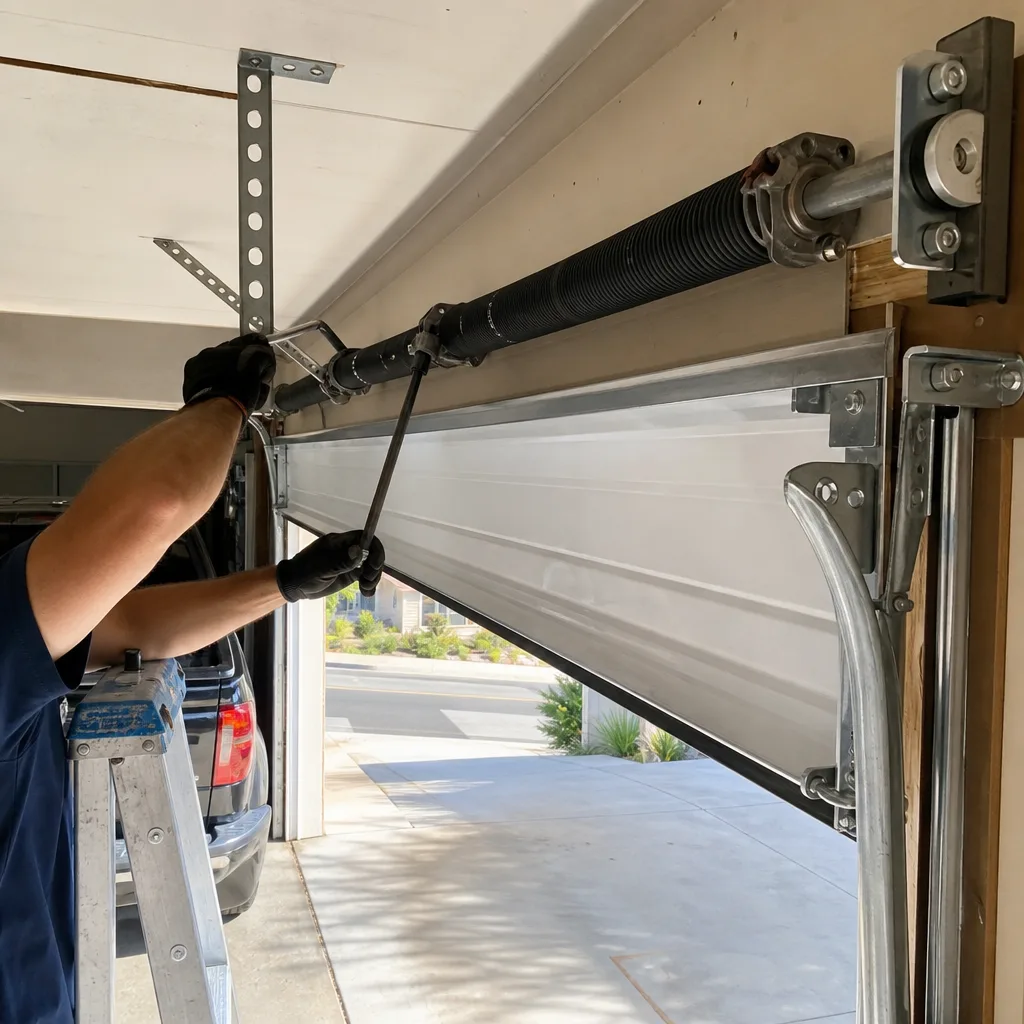 After
After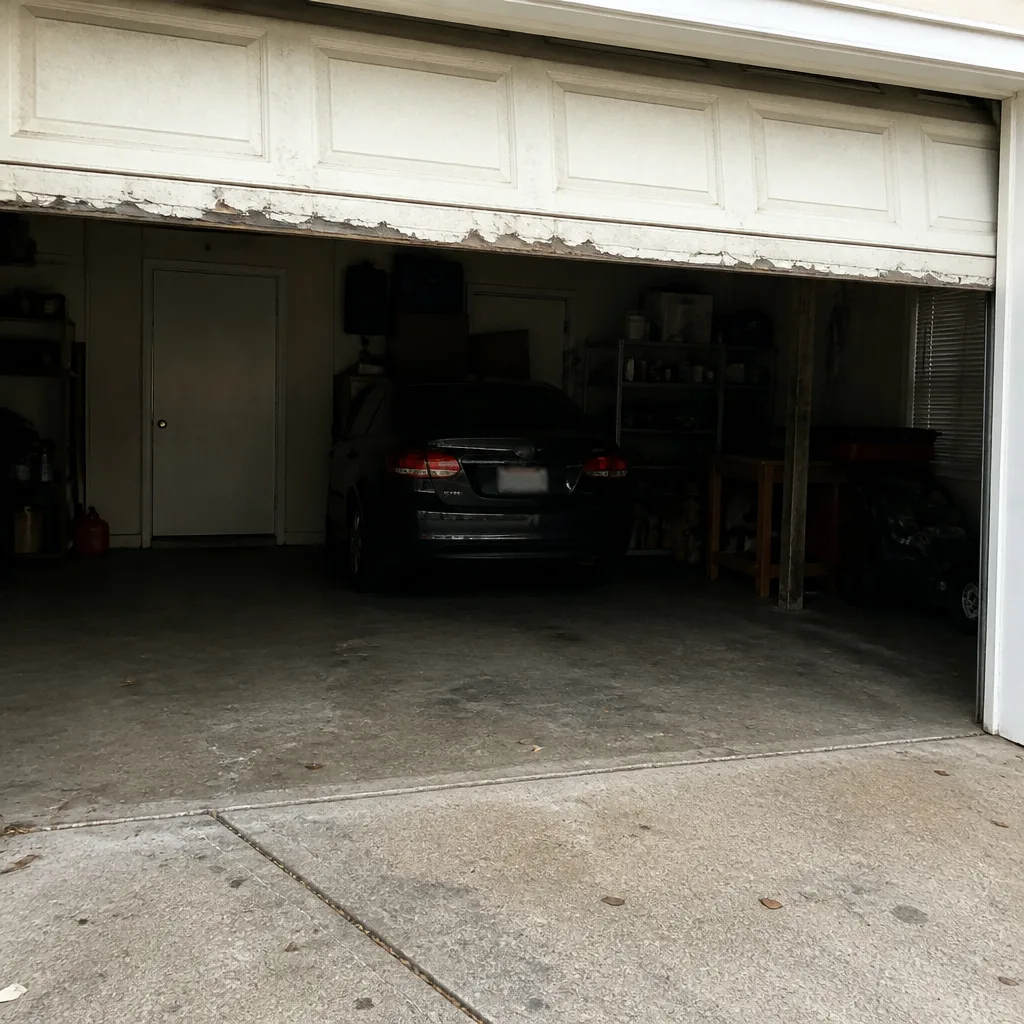 Before
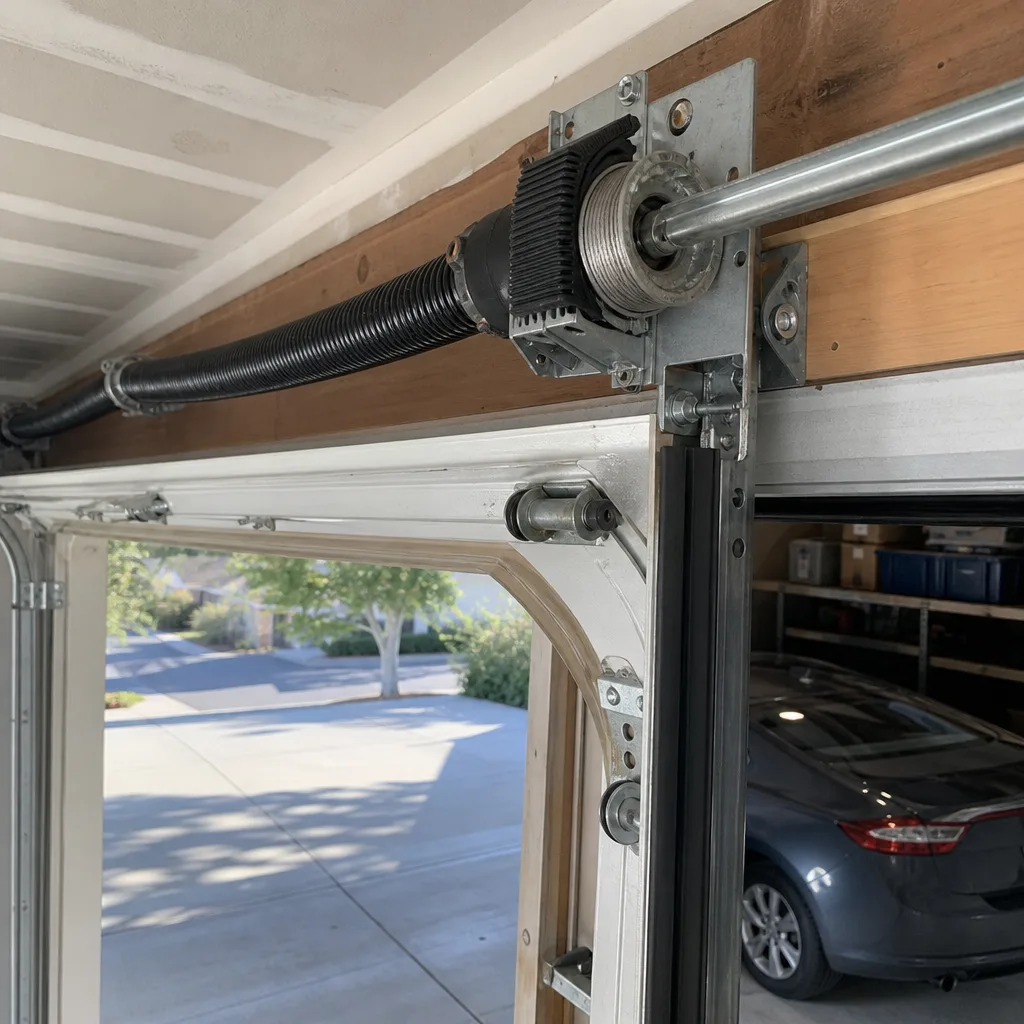 After
After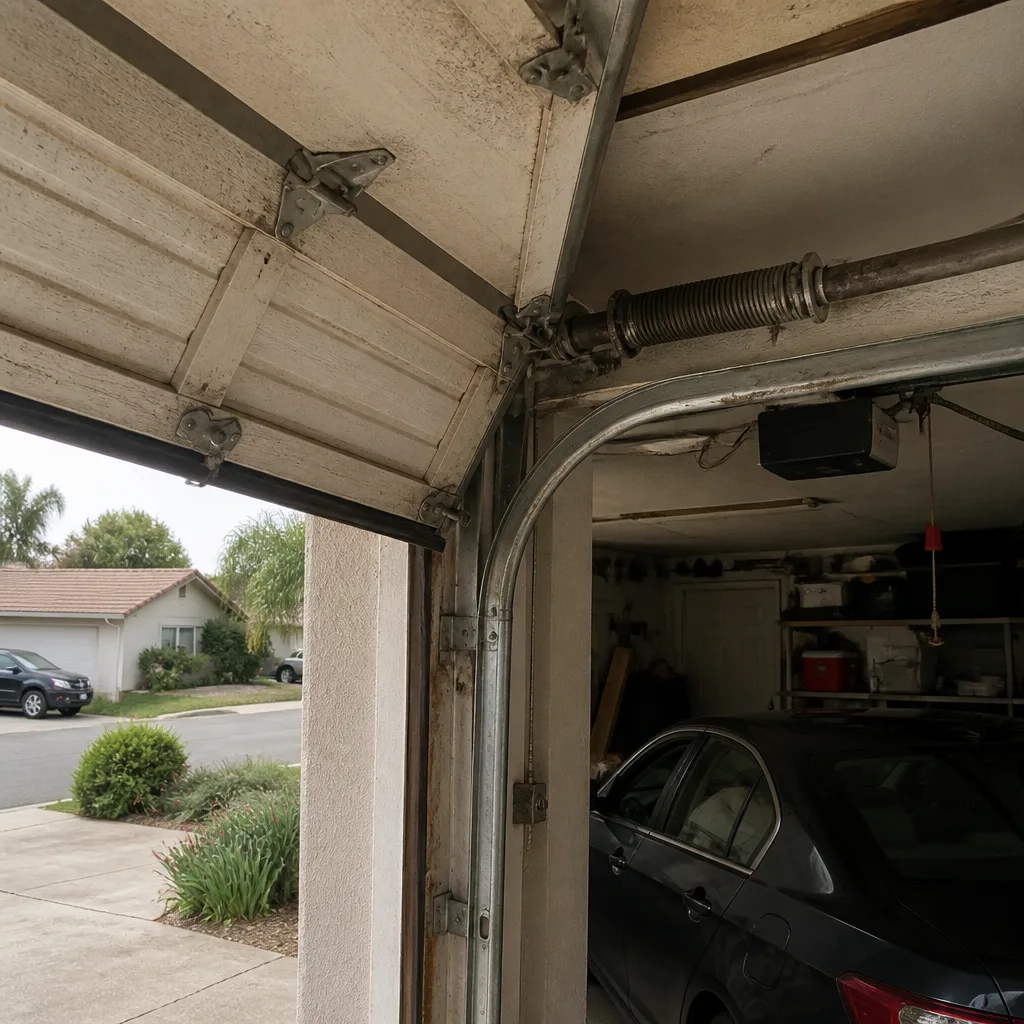 Before
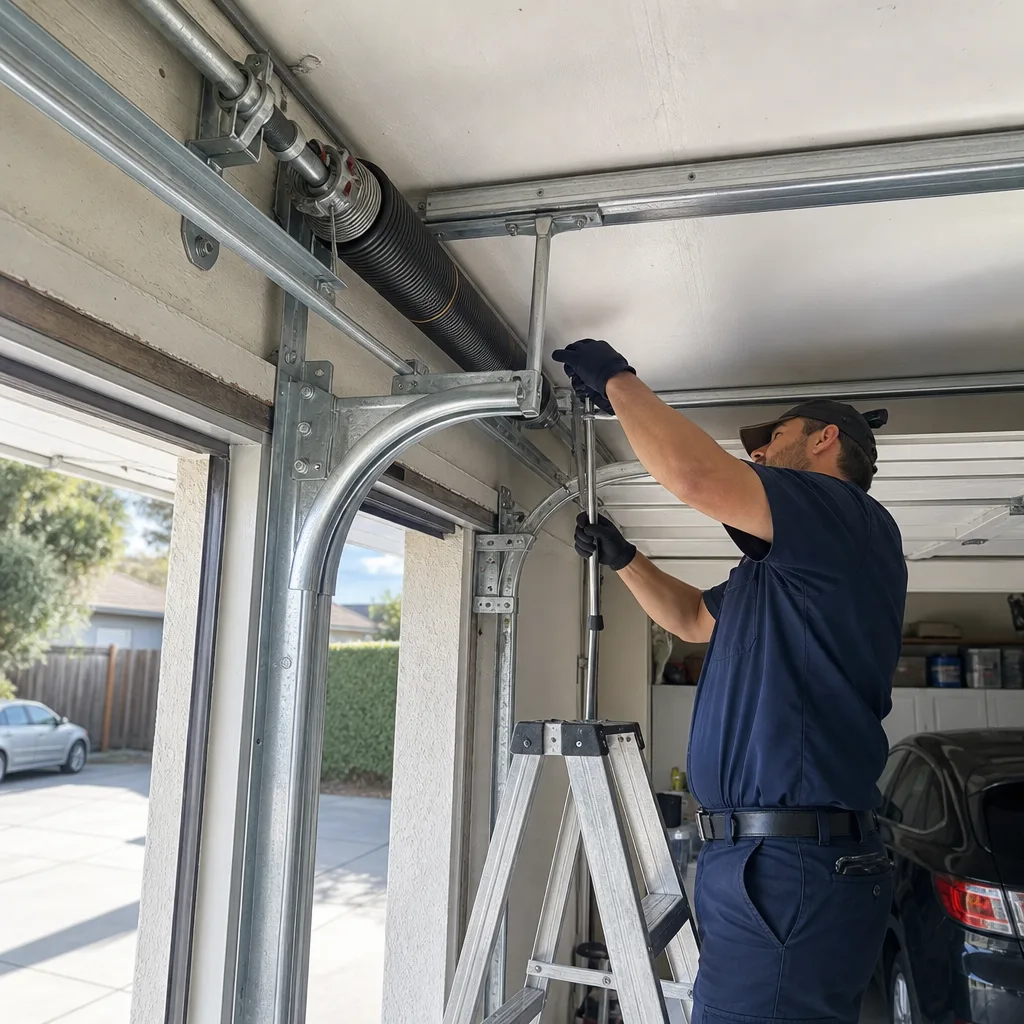 After
AfterThe Complete Guide to Garage Door in Vista
Here’s something the big-box showroom will never tell you: in Vista, your garage door has a lifespan measured not in decades but in microclimates. The same door that survives twenty years three miles inland can show rust bloom, seal rot, and spring fatigue in five when it sits a few blocks from the coast. Most homeowners replace their garage door based on looks, then wonder why the bottom seal is rotting in three years. In Vista, salt-laden marine layer air is the silent culprit nobody mentions at the point of sale. This guide maps every decision, material, spring type, opener, insulation, against Vista’s actual conditions so you buy once and maintain confidently for the next fifteen years. For more guides & resources on keeping your door running, see our blog.
Quick Answer
The right garage door for a Vista home depends on where in Vista you live: west of Melrose near the coastal influence demands rust-resistant hardware and composite or fiberglass panels, while homes east of Emerald in warmer inland ZIP codes perform best with steel and proper ventilation. Spring replacement in Vista averages $180 to $340 per spring, and a full door replacement typically runs $1,200 to $3,800 installed depending on material and size. The single most important Vista-specific choice is not the panel color, it is the hardware metallurgy and weatherstripping rated for marine layer exposure.
Table of Contents
- What Vista’s Climate Actually Does to a Garage Door
- The Best Door Materials for Vista’s West Side vs. Inland ZIP Codes
- Spring Replacement in Vista: What It Costs and Why It Fails Early Near the Coast
- Garage Door Insulation in Vista: When R-Value Matters and When It Does Not
- Sectional, Roll-Up, or Carriage Style: Real Maintenance Burden for Vista Homes
- The Vista-Specific Opener Spec Sheet: Battery Backup, Smart Home Compatibility, and Santa Ana Winds
- How to Read a Garage Door Quote So You Know It Was Priced for Vista, Not Phoenix
- Common Mistakes to Avoid
- When to Call a Professional
- Frequently Asked Questions
- The Bottom Line
What Vista’s Climate Actually Does to a Garage Door
Vista sits in a strange meteorological sweet spot, close enough to the Pacific that marine layer rolls in most summer nights, yet far enough inland that August afternoons push into the high 80s and sometimes past 90. That daily cycle of cool, damp nights and hot, dry days is hard on metal. It is harder on cheap metal. Here is what we see in the field, week after week, in different parts of town.
The marine layer arrives after midnight and hangs around until mid-morning. The air carries salt particles picked up over the ocean. When that moist, salty air settles on bare steel, it starts the oxidation process before you have finished your first cup of coffee. Homes within about three miles of the coast, Shadowridge on the south side, neighborhoods off Foothill Drive, anywhere the fog lingers longest, see torsion springs rust at roughly twice the rate of homes near the 78 corridor on the north side of Vista. That is not marketing. That is what twenty years of service calls in one ZIP code teach you.
The second Vista climate factor is the heat swing. A steel garage door facing west off Buena Vista Creek picks up direct afternoon sun. Door surface temperatures can swing forty degrees in a few hours. That thermal expansion and contraction stresses the panel seams, loosens fasteners, and accelerates the breakdown of vinyl weatherstripping. Doors on shaded north-facing walls live measurably longer.
What this means practically: when you choose a door in Vista, choose hardware first, panel material second, color third. The hardware is what fails.
The Best Door Materials for Vista’s West Side vs. Inland ZIP Codes
No single door material wins everywhere in Vista. The right answer changes depending on whether your home sits under the marine layer most nights or bakes in the inland afternoon heat. We split Vista into two zones in our own thinking: the coastal influence zone, roughly west of Melrose Drive, and the inland zone, east of Melrose toward the 15 and up Buena Creek.
Coastal influence zone, west Vista:
- Fiberglass with galvanized steel frames: Fiberglass panels do not rust and do not absorb marine moisture the way unsealed wood does. Clopay and Amarr both make fiberglass lines with galvanized internal steel frames that resist the salt air. This is the lowest-maintenance option for homes close to the fog line.
- Powder-coated aluminum: Aluminum does not rust, period. A quality powder-coated aluminum door with stainless steel hardware handles coastal Vista without surface treatment every year. These doors dent more easily than steel, so think about whether kids or bikes share the driveway.
- Vinyl composite: For homeowners who want zero yearly maintenance, vinyl composite doors made by Amarr hold up well in coastal conditions. They will not rust, they resist denting reasonably well, and they never need painting.
Inland zone, east Vista:
- Insulated steel, 2-inch or 3-layer: Once you are away from the daily fog, a quality 24-gauge or 25-gauge steel door from Clopay, Wayne Dalton, or Craftsman handles the heat swing without trouble. The key is the paint finish: look for a factory-applied polyester or polyurethane coating, and avoid any bare steel edges left exposed after field cutting.
- Steel with wood-look overlay: For curb appeal on newer Shadowridge builds, steel doors with embossed wood-grain patterns or applied composite overlays give the carriage look without the maintenance burden of real wood in Vista’s heat.
One material we caution against in both zones: unsealed solid wood. Real wood garage doors are beautiful. They are also a maintenance job disguised as a home improvement. In Vista’s moisture-and-heat cycle, a solid wood door expands, contracts, warps, and eventually rots at the bottom rail unless you are sanding and resealing every two years. Most Vista homeowners do not want that second job.
Spring Replacement in Vista: What It Costs and Why It Fails Early Near the Coast
Garage door spring replacement in Vista typically costs between $180 and $340 per spring for a standard residential torsion spring, installed, with labor included. That is the range we quote most often. The variables are wire size, spring length, and whether you have one spring or two. A single-car door usually takes one spring. A double-car door always takes two, and both should be replaced at the same time even if only one has snapped, because the remaining spring has the same cycle count as the broken one.
Here is what that price includes in our shop, and what an honest quote should include anywhere in Vista:
- Two high-cycle springs matched to your door weight, not just your door size
- Inspection and lubrication of all rollers, hinges, and the opener carriage
- Balance test after installation, door should hold at halfway open
- Written warranty on the springs, typically 3 to 5 years on high-cycle wire
Now, the Vista-specific failure pattern. Torsion springs fail from metal fatigue. Every time the door cycles, the spring coils and uncoils, and the steel accumulates microscopic stress fractures. But rust accelerates failure because it creates surface pitting, and pitting becomes stress concentration points where cracks begin. Near the coast in west Vista, where marine layer humidity settles nightly and salts the metal, springs fail measurably faster than inland. A spring rated for 10,000 cycles might yield 7,000 in Shadowridge. That is why an honest local shop will spec springs one gauge heavier than a national catalog chart recommends for your door weight.
Safety note: torsion springs operate under several hundred pounds of tension. A 200-pound door is riding on two springs that store enough energy to send a steel winding bar through drywall. Do not attempt to replace a torsion spring yourself. This is not a DIY vs Professional Garage Door: The Vista Homeowner’s Decision Guide situation with a YouTube tutorial and a sore back the next day; a wrong move is hospital time. Call someone who carries the right winding bars and has done it a thousand times.
Garage Door Insulation in Vista: When R-Value Matters and When It Does Not
The standard garage door insulation pitch is built for Minnesota. That is where R-value charts were written, and they do not translate to Vista. We rarely get freezing temperatures. Your garage door is not fighting a 60-degree temperature differential against a sub-zero night. So before you pay extra for a fancy R-18 door, think about what insulation actually does for a Vista home.
Insulation provides three benefits: temperature buffering, noise reduction, and panel rigidity. Here is when each one matters in Vista.
- Attached garages on warm summer days. An uninsulated steel door in direct afternoon sun becomes a radiant heater pumping heat into your garage. If your garage shares a wall with your living room, that heat migrates. An R-9 to R-12 insulated door keeps interior garage temperatures noticeably cooler during August heat waves. This is the most common reason Vista homeowners upgrade insulation.
- Workshops and home gyms. If you actually use your garage as a workspace, insulation keeps it usable during both the afternoon heat and the cooler winter mornings when the marine layer sticks around until 10 AM.
- Bedroom over the garage. Homes with a bonus room or master suite above the garage, common in newer Vista builds, benefit from an insulated door plus an insulated ceiling. The door is a smaller thermal bridge than the ceiling, but every bit helps.
- Noise, not temperature. A double-layer steel door with a foam core is noticeably quieter than a single-layer steel door, both in operation and in blocking street noise. If you live on a busier Vista thoroughfare, insulation helps with sound more than temperature.
But if you have a detached garage on the inland side of Vista with no living space around it, and you park two cars and store the Christmas decorations, an insulated door is money you could spend elsewhere. A standard single-layer steel door serves that use case fine. The honest answer is: insulation is a comfort upgrade, not a necessity in Vista’s climate, and you should buy it for the specific benefit you want.
Sectional, Roll-Up, or Carriage Style: Real Maintenance Burden for Vista Homes
Garage door styles break into three functional families. Each has a different maintenance profile in Vista’s climate, and the choice is about more than curb appeal.
Sectional doors are by far the most common in Vista. Four to five horizontal panels hinge together and roll up on a curved track into the garage ceiling. They seal well, insulate well when constructed as double or triple layer, and accept standard openers. Maintenance burden: rollers and hinges need lubrication twice a year in Vista; the marine layer accelerates corrosion on exposed metal rollers and cheap hinges, so quality nylon rollers with sealed bearings are worth the small upgrade.
Roll-up doors, the kind that coil into a drum above the opening, are rare on residential garages in Vista. They make sense on commercial properties and very shallow garages where a sectional track would eat into ceiling storage. Maintenance is straightforward, the coil mechanism is protected, but the slats are thin steel that shows dents and handles our coastal salt air poorly unless upgraded to aluminum or coated steel. For a Vista home, roll-up is a niche choice for specific garage geometry.
Carriage-style doors, hinged doors that swing outward or slide, are the aesthetic choice on older Vista homes in established neighborhoods. They have no springs, no tracks, no opener arm in the traditional sense, and when properly mounted on heavy-duty hinges they have remarkably low mechanical maintenance. Their burden in Vista is finish maintenance: wood carriage doors need yearly inspection of the bottom rail and weatherstripping because our moist winter mornings soak into any paint breach. Composite carriage doors from Clopay or Amarr eliminate most of that labor.
For the average Vista homeowner replacing an existing sectional, the practical advice is: stay with sectional, upgrade hardware, choose a finish appropriate for your microclimate zone. The door type is not the place to get creative; the hardware metallurgy and weatherstripping are.
The Vista-Specific Opener Spec Sheet: Battery Backup, Smart Home Compatibility, and Santa Ana Winds
When a Vista homeowner asks us what opener to buy, our recommendation looks different than a generic online list. Vista has two realities that shape the spec sheet: Santa Ana wind events that knock out power, sometimes for hours, and a housing stock that increasingly includes smart home systems in newer communities like Shadowridge. Here is what we tell our neighbors.
Battery backup is not optional in Vista. Santa Ana winds in the fall bring sudden power outages. When the power drops, a standard opener becomes a door locked shut. If your car is inside, you are stuck. For roughly $150 to $200 more than a base-model opener, a battery backup unit gives you fifteen to thirty full cycles during an outage. LiftMaster and Genie both make solid battery backup models. If you have ever stood in a dark garage wondering how to manually release a 200-pound door, the upgrade pays for itself in one wind event.
Smart home compatibility matters in newer Vista builds. Communities built in the last decade have homeowners who expect to open the garage from a phone, set up temporary access codes for delivery drivers, and receive alerts when the door cycles. Chamberlain’s myQ ecosystem integrates with most setups, and Craftsman’s smart-enabled openers use the same underlying platform. Look for an opener with built-in Wi-Fi rather than an add-on hub; fewer moving parts, fewer failure points.
Horsepower spec for Vista’s heat: A half-horsepower opener is adequate for a single-car door and fine for most double doors weighing under 300 pounds. But our inland summer heat builds friction in aged rollers and hinges. If your door is heavy, a double-car steel unit, consider a three-quarter-horsepower motor running at a gentler duty cycle rather than a half-horsepower unit straining. The opener lasts longer, and so do the springs.
If the opener is straining, the problem is almost never the opener. Nine times out of ten, a strained opener means a failing spring, dry rollers, or an unbalanced door. Replacing the opener before fixing the door is buying a new engine because the transmission is shot.
How to Read a Garage Door Quote So You Know It Was Priced for Vista, Not Phoenix
A garage door quote tells you a lot about the contractor before the first truck shows up. Here is how to read one line by line so you can tell whether the person quoting actually understands Vista, or is working from a national price book written in Arizona.
- Door material and gauge, not just door name. A quote that says “steel door” without specifying 24-gauge, 25-gauge, or 26-gauge is hiding something. Thinner 26-gauge steel dents and fails faster in our heat swings. Coastal Vista homes should see galvanized or coated steel specified. If the quote does not mention metallurgy at all, ask.
- Hardware spec line. Look for a line item identifying rollers, hinges, and brackets. Nylon rollers with sealed bearings cost a few dollars more and last far longer in Vista’s marine air. A quote that just says “hardware included” with no spec means whatever comes cheapest out of the box.
- Weatherstripping and bottom seal type. This is the line that tells you if the quote is Vista-specific. Marine layer moisture rots standard vinyl bottom seals fast. A local quote specifies commercial-grade rubber or dual-fin strip meant for coastal exposure. If the quote does not mention the seal at all, it was copy-pasted from somewhere dry.
- Spring cycle count. Quote should state the spring wire size and rated cycles, such as 10,000-cycle or 25,000-cycle springs. Coastal Vista calls for higher cycle ratings to compensate for accelerated rust fatigue. No cycle count on the quote means the cheapest springs.
- Labor warranty in writing. The 90-Day Done Right Promise is our standard: if it is not done right, we make it right, in writing, on every invoice. Any quote should have a written labor warranty. Verbal promises are worth nothing when the door binds three weeks later.
- Permit and code language. Vista requires permits for structural changes to garage door openings. A local contractor knows this and includes or addresses it. A template quote ignores it entirely.
Read the quote like a contract, because it is one. If the line items are vague, the work will be vague. Specificity is the first signal of competence.
Common Mistakes to Avoid
- Buying the cheapest steel door near the coast. Bare steel at a low price near west Vista is a rust experiment in progress. You will replace the bottom seal and watch surface rust bloom within two or three marine layer seasons. Spend the difference on galvanized or powder-coated steel, or choose fiberglass.
- Replacing one spring instead of both. When one torsion spring snaps, the other has the same age and cycle count. Replacing only the broken one means paying twice within a year or two. We count spring cycles the way you count tire miles, and when one is done, the other is done.
- Ignoring the bottom seal. The bottom seal is the first thing the marine layer attacks. When it cracks, moisture creeps under the door, and that moisture starts working on the panel edge and the concrete. Replace the seal every two to four years on coastal Vista homes. It is a $40 part and twenty minutes of labor.
- Lubricating springs with the wrong product. WD-40 is a solvent, not a lubricant. It cleans the spring and accelerates rust. Use a silicone or lithium-based garage door lubricant on springs, rollers, and hinges. In Vista, lubricate twice a year, fall and spring, right around the time change.
- Painting over rust without treating it. A wire brush and Rust-Oleum are not a metallurgical fix. If rust has pitted the spring surface, the spring is compromised. Painting over spring rust is hiding a failure waiting to snap.
- Pricing the job without seeing the door. Phone quotes given without door photos or an in-person look are guesses. A door’s weight, spring condition, and track alignment cannot be diagnosed over the phone. We quote on the call and hold the number when we get there, because the number reflects what we see.
When to Call a Professional
Call a professional the moment you see any of these: a garage door that binds or jerks on the way up, a spring with visible rust pitting or a gap in the coil, a door that drops faster than normal when released from the opener, a bottom seal rotted through, or any cable that looks frayed. Torsion springs and the cables under tension are the most dangerous components in your home outside of the electrical panel. A door is 200 pounds riding on two springs. Respect it. For anything less urgent, a twice-yearly inspection catches small failures before they become emergency calls in the middle of a Santa Ana power outage. Otto’s Garage Door offers free estimates in Vista, call (760) 891-5938.
Frequently Asked Questions
A new garage door installed in Vista typically costs between $1,200 and $3,800 depending on material, size, and insulation level-see our Garage Door Cost Breakdown: The Vista Homeowner’s Reference for 2026 for the full picture. A single-car steel door starts around the low end; a double-car fiberglass or wood-look composite door with an insulated core reaches the high end. Call (760) 891-5938 for an exact quote, estimates are free and we hold the number we quote on the phone.
Standard torsion springs last 7 to 10 years in Vista’s inland areas, but near the coast where marine layer humidity accelerates rust, realistic lifespan drops to 5 to 7 years. High-cycle springs rated for 25,000 or more cycles extend that significantly. If your springs show rust pitting or the door feels suddenly heavy on manual release, have them inspected before they snap.
Nightly marine layer air carries salt particles from the Pacific that settle on exposed steel. Combined with the daily temperature swing, that creates persistent damp conditions on unprotected metal. West Vista neighborhoods within a few miles of the coast see rust on bare steel much faster than inland ZIP codes east of Melrose Drive.
Yes, spring replacement is a same-day job when we have the spring on the truck, and we carry the common sizes. Call (760) 891-5938 and a live person answers, quotes the job on that call, and holds the number when we arrive. A live voice at nine at night when a spring lets go means your car is not stuck until morning.
Replacing a garage door in the existing opening does not require a permit in Vista, but enlarging the opening, adding a second door opening, or structural changes to the header do. Read our Garage Door Permits, Codes & Inspections in CA: What You Need to Know before you start. If you are unsure whether your project crosses that line, ask, and if the contractor cannot answer clearly, call someone who has pulled permits in this city before.
A fair quote in Vista specifies door gauge and material, hardware type, spring cycle count, and weatherstripping grade, and it includes a written labor warranty. Quotes that list only a door model name and a price are working from a national template, not from your home’s microclimate. Ask for line items. Anyone who knows Vista garage doors can explain every one of them.
The Bottom Line
The garage door that works in Vista is chosen for the microclimate you actually live in, not the one in the catalog photograph. Coastal marine layer air means rust-resistant hardware and better weatherstripping. Inland heat swings mean proper steel gauge and thermally stable panel construction. Springs have a cycle count and a rust clock, and both run faster near the ocean. Insulation is worth buying when your garage shares a wall with living space, and wasted money when it does not. Get a quote that names specifics, buy from someone whose name you can verify, and you will replace this door once in the next two decades instead of nursing a cheap one every few years. Call (760) 891-5938 for a free estimate and a straight answer. We have been in this county since 2004, and Otto is a palindrome: reads the same from either end, same as the door.
Written by Otto Reinhardt, Owner at Otto’s Garage Door, serving Vista since 2004.