
Last updated September 10, 2026
Full 25-point door and opener safety check with every visit - springs, cables, rollers, tracks, and your LiftMaster or Chamberlain opener included
You get a price before we start. It does not change when the truck arrives.

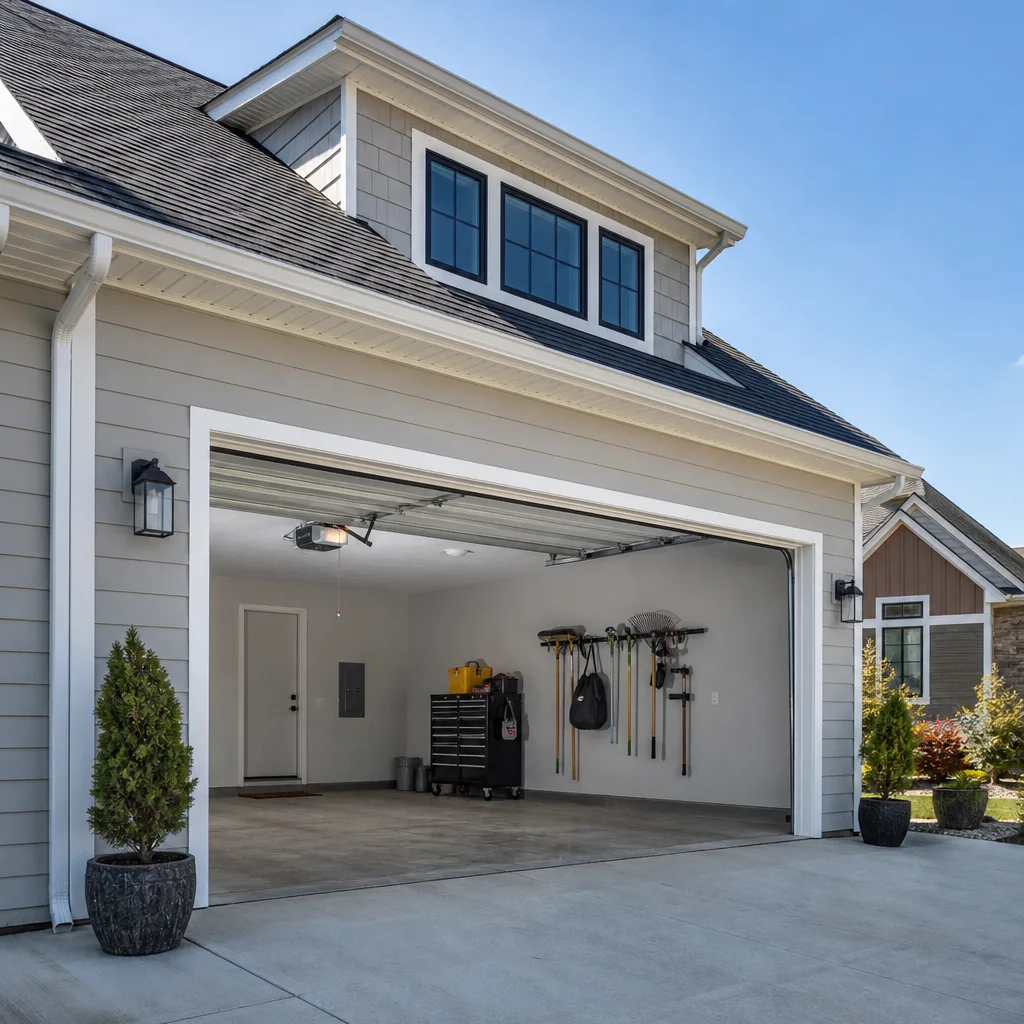
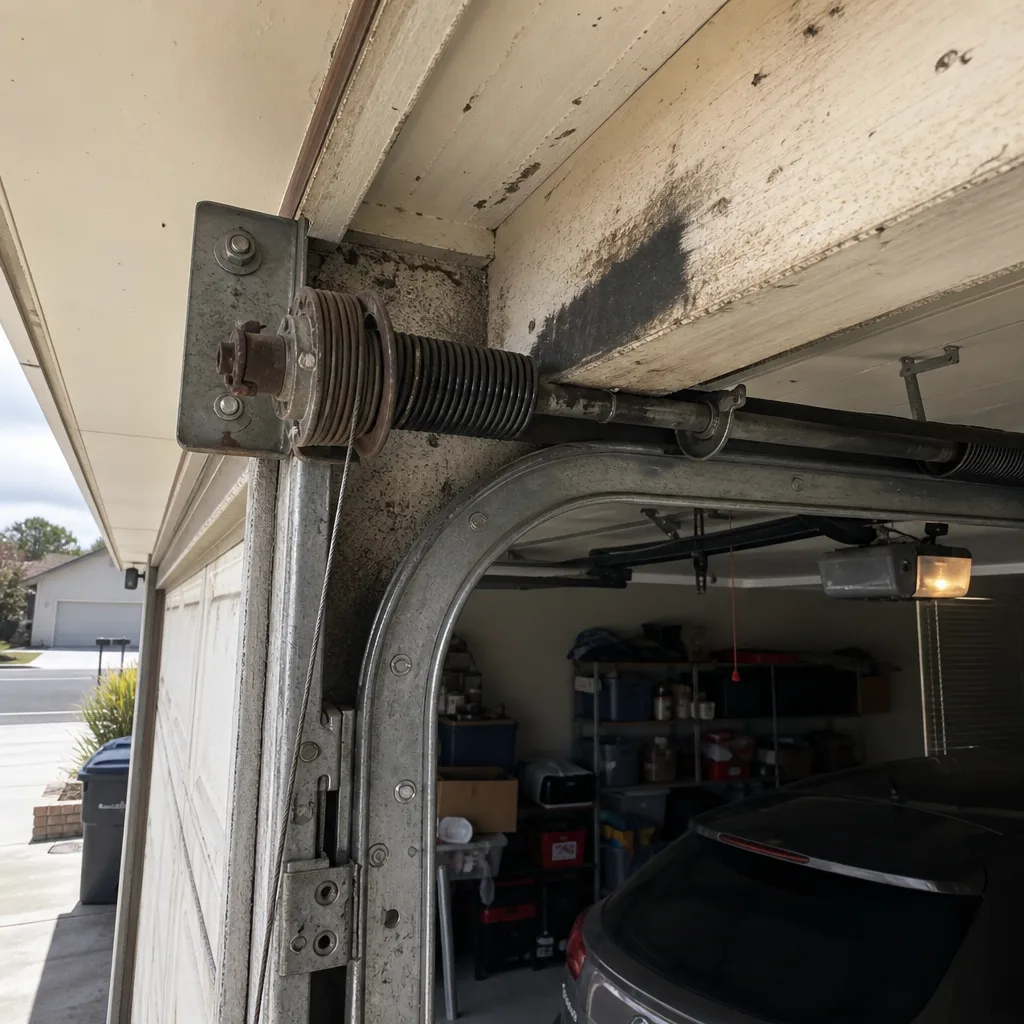 Before
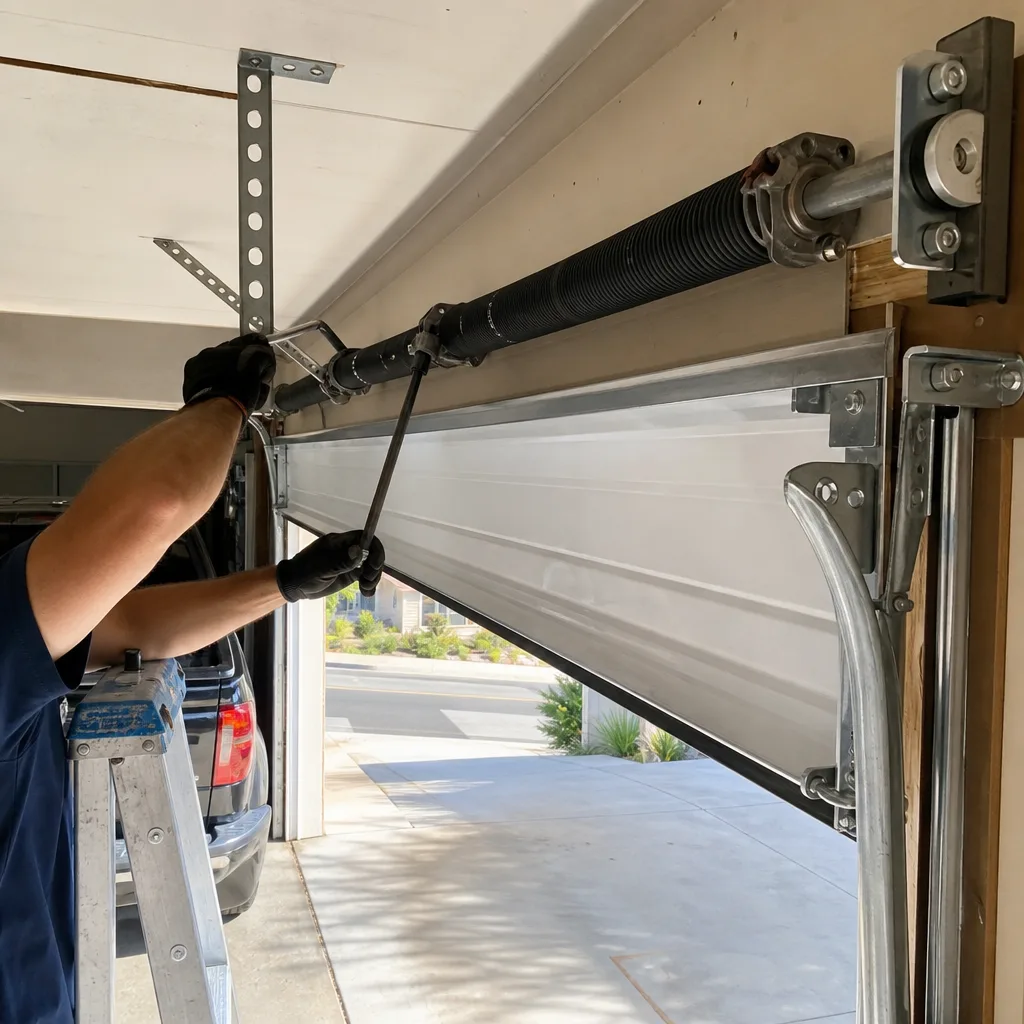 After
After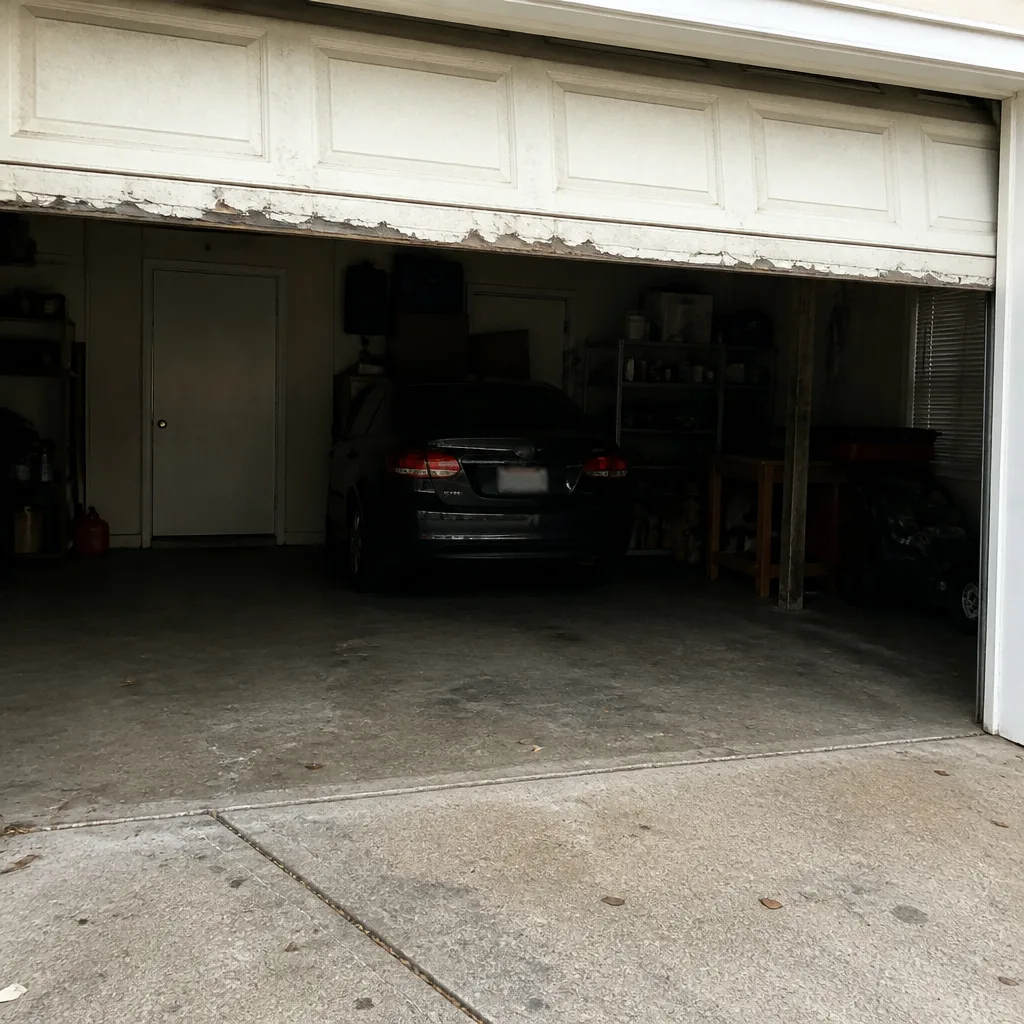 Before
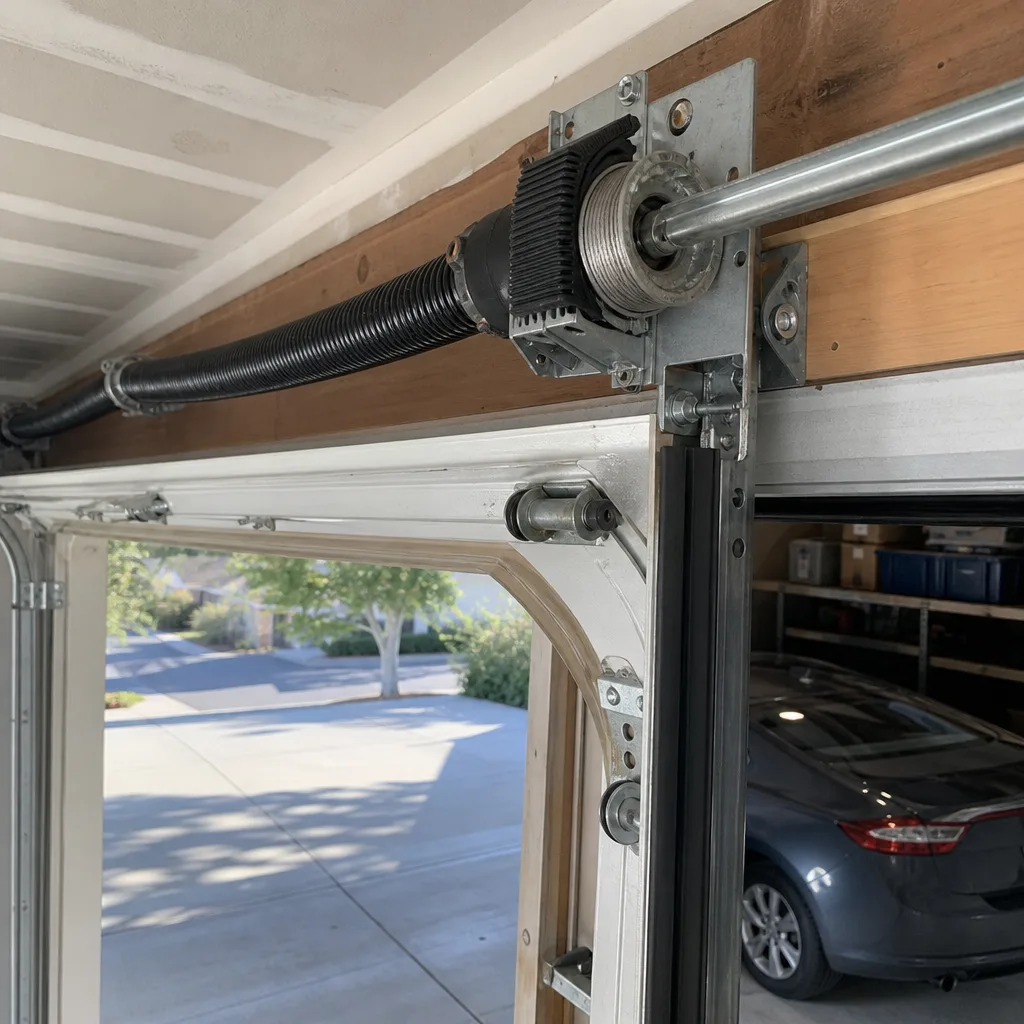 After
After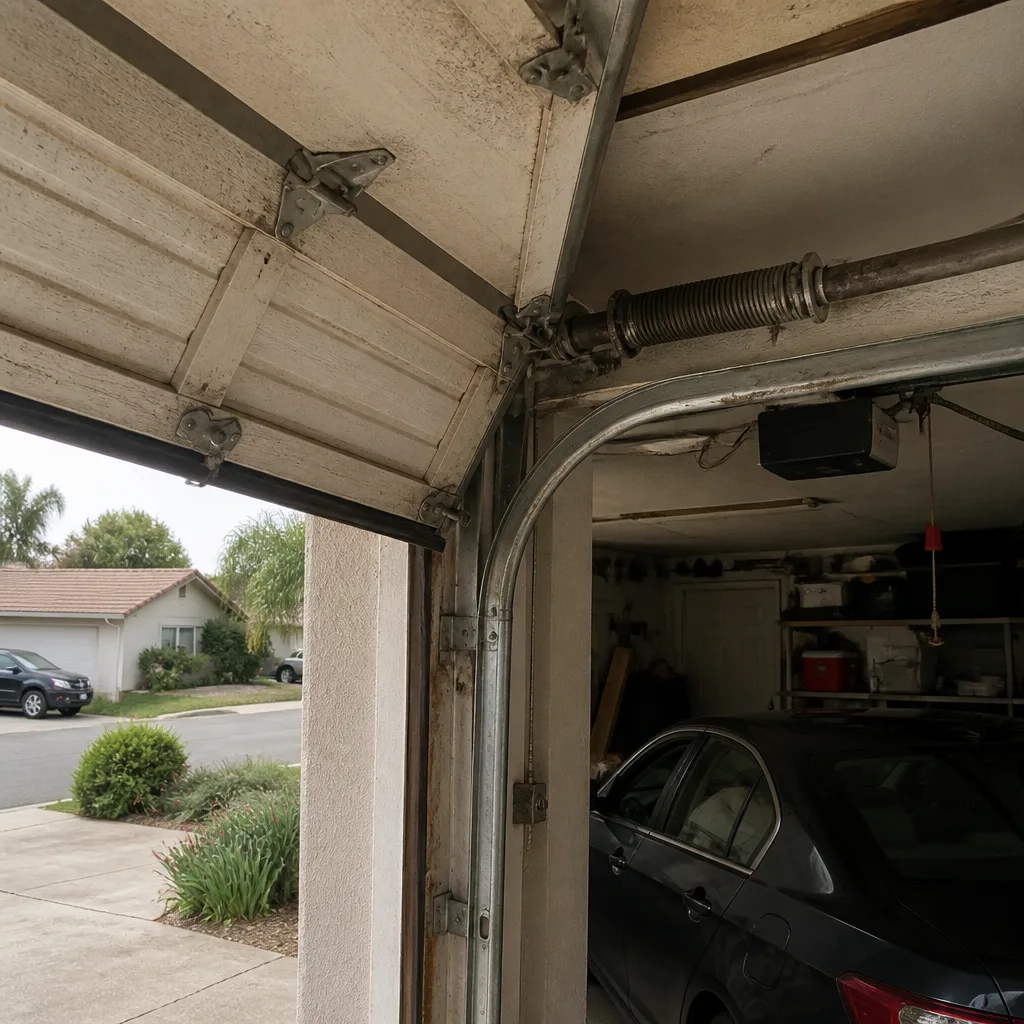 Before
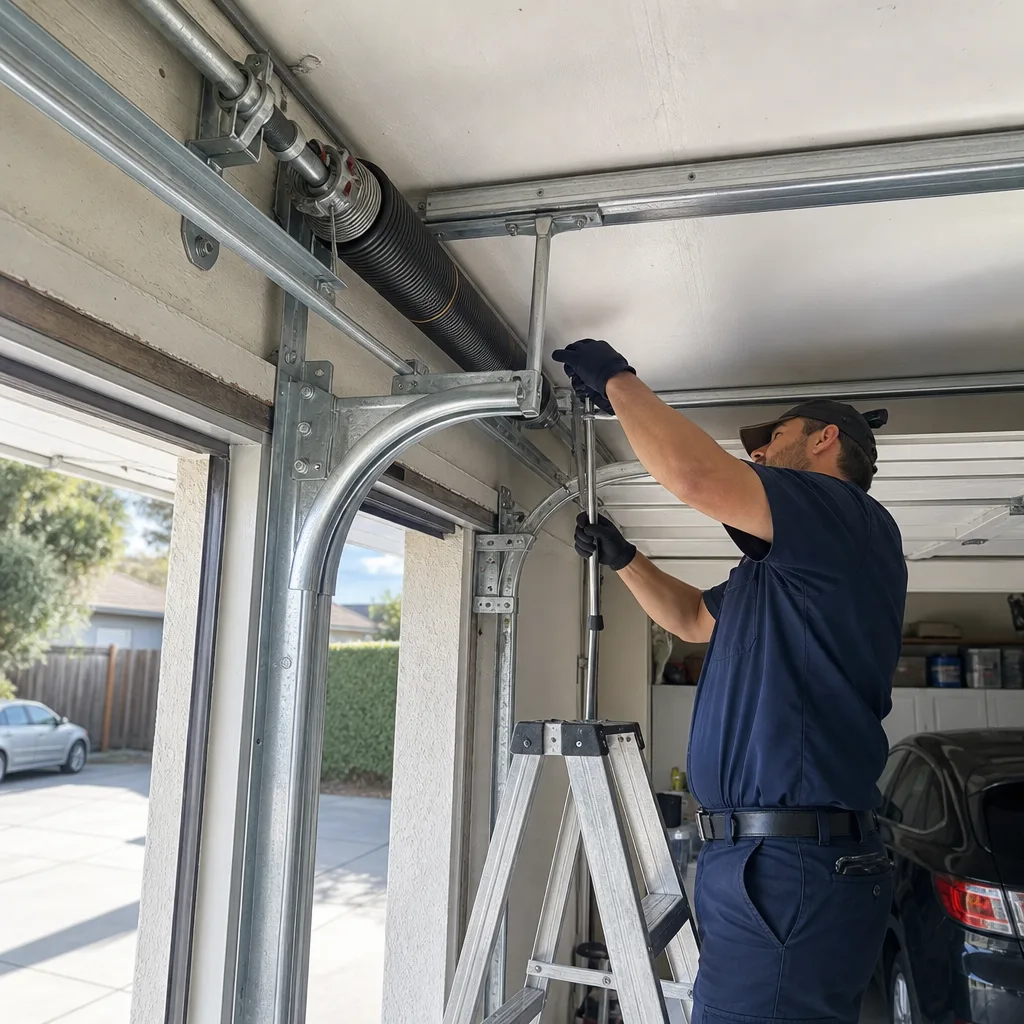 After
AfterSeasonal Garage Door Care for Vista: Year-Round Homeowner’s Guide
Most garage door maintenance guides are written for someone in Minnesota or upstate New York, where the enemy is ice, road salt, and sub-zero mornings. Here in Vista, nobody’s scraping frost off their tracks in January. The real threats come from the Santa Ana winds that rip through in October, the marine layer that parks over us from December through February, and the August sun that turns a dark metal door into a 160-degree panel. Each of these seasons stresses your door differently, and a maintenance routine built around Vista’s actual weather calendar will catch failures before they strand you in the driveway. This guide maps the care tasks to what our weather actually does, month by month, and you can find more guides & resources on our blog.
Quick Answer
Seasonal garage door maintenance in Vista means running four distinct checklists: a Santa Ana wind prep in October that clears debris and tests the balance, a winter wipe-down routine that removes marine-layer salt film from hardware, a spring humidity check on weatherstripping and wood-composite panels, and a summer heat inspection for spring fatigue on south-facing doors. Each season takes about 20 minutes of homeowner work. Done consistently, this calendar adds 3 to 5 years to your spring life and keeps emergency calls off your schedule. Garage Door Repair in Vista is our most-read page for what to do when a season wins anyway.
Table of Contents
- Why Vista’s Weather Calendar Runs Backwards from the Rest of the Country
- Santa Ana Season (October-November): The Highest-Stress Period for Vista Garage Doors
- Marine Layer Winter (December-February): Corrosion Season on Exposed Hardware
- Spring Humidity Swings (March-May): Warping, Swelling, and Seal Failure
- Summer Heat (June-September): Thermal Cycling and Spring Tension Loss
- The Two-Page Seasonal Checklist: Vista’s Weather Calendar in One Place
- Common Mistakes to Avoid
- When to Call a Professional
- Frequently Asked Questions
- The Bottom Line
Why Vista’s Weather Calendar Runs Backwards from the Rest of the Country
Every national garage door maintenance guide tells you to check your weather seal before winter and lubricate your springs in the fall. Fine advice, but it’s aimed at places where winter means snow. In Vista, the calendar flips. Our harshest season is not January; it’s October, when the Santa Anas start. Our corrosion season is not spring thaw with road salt; it’s winter, when the marine layer sits on us for weeks and deposits a fine film of salty moisture on every exposed metal surface, including your torsion springs, rollers, and hinges. Our “harsh winter” is the fog, and our “spring thaw” is the humidity spike in March. If you follow a generic maintenance schedule, you will check the wrong things in the wrong months. A Vista-specific calendar is not a garnish; it is the whole point.
We have worked on garage doors across this county since 2004, and the failure patterns follow the weather patterns almost mechanically. Doors that fail in November almost always failed because of October debris and wind stress. Doors that seize up in March almost always seized because of February salt film that never got wiped. Once you know the pattern, prevention is straightforward. That is what this guide is for.
Santa Ana Season (October-November): The Highest-Stress Period for Vista Garage Doors
The Santa Ana winds are the single most destructive weather event for garage doors in Vista. The combination of sustained gusts, flying debris, and single-digit humidity does three things at once: it hammers the door panels with whatever is loose in the neighborhood, it dries out and cracks the rubber weatherstripping, and it forces the opener motor to work against wind pressure every time the door cycles. Most homeowners do not realize the opener is fighting the wind until the motor burns out on a red-flag day. Before the first Santa Ana of the season, run these three checks.
- Clear the track path and the door face. Walk the area in front of and behind the door. Palm fronds, eucalyptus bark, and loose planter material all become projectiles in a 40 mph gust. A single palm frond wedged in the track during a wind event can bend the track or pop a roller out of alignment. Also check the top of the door; debris that lands up there gets ground into the panels every time the door opens.
- Test the balance with the opener disengaged. Pull the red release cord and lift the door manually to waist height. It should stay put. If it drops, your springs are losing tension, and the Santa Ana season is exactly when a weak spring fails completely because the wind is adding lateral load to an already compromised system. A door is 200 pounds riding on two springs. Respect it. Do not attempt to adjust spring tension yourself; this is a high-tension component that can cause serious injury. This is a check, not a repair.
- Inspect the weatherstripping on the bottom and sides. Santa Ana air is brutally dry, with humidity sometimes dropping below 10 percent. Rubber seals crack and shrink in those conditions. Run your fingers along the bottom seal looking for splits, and check the side seals for gaps. Cracked seals let dust, leaves, and even embers into the garage during red-flag conditions. If the seal looks dry but intact, a silicone-based rubber conditioner keeps it supple.
One more thing about Santa Ana season in Vista. The wind carries fine dust that settles on the torsion springs and works into the coil gaps. That dust is abrasive. When the springs cycle under load, the dust grinds against the coils and accelerates wear. A quick blast with compressed air or a dry cloth across the springs after a wind event takes thirty seconds and removes the grit. We count spring cycles the way you count tire miles; anything you do to reduce abrasion adds cycles to the life of the spring. Otto’s Garage Door home has more on how we evaluate springs during a service call.
Marine Layer Winter (December-February): Corrosion Season on Exposed Hardware
Vista’s winter does not freeze, but it does not dry out either. The marine layer that parks over North County from December through February keeps relative humidity high, often between 70 and 85 percent, and the air carries a fine salt content from the Pacific. That salt film settles on every exposed metal surface on your garage door, and it sits there for weeks. This is corrosion season, and it is why the hardware on a five-year-old door three miles from the coast in Vista can look worse than the hardware on a fifteen-year-old door in Escondido.
The fix is simple and it takes ten minutes. About once a month during the winter, wipe down the exposed hardware with a dry cloth. Focus on the torsion springs, the roller stems, the hinges, and the brackets. The goal is to remove the salt film before it starts pitting the metal. Do not use water; you are trying to remove the moisture, not add more. After you wipe, inspect for the first signs of corrosion. Rust on a spring is not cosmetic; rust creates surface pitting, and pitting creates stress risers, and stress risers create spring failures. A spring that snaps at 3 a.m. in February usually started rusting the previous winter.
Rollers deserve special attention in Vista’s winter months. Nylon rollers with sealed ball bearings handle the marine layer far better than the steel rollers builders put in. If you see rust on the roller stems, do not spray them with a household lubricant like WD-40. WD-40 is a solvent, not a lubricant, and it will strip what little grease remains. Use a white lithium grease on metal parts and a silicone spray on nylon components. If the rollers are pitted or wobbling, that is a replacement job, not a maintenance job. We carry LiftMaster and Chamberlain rollers on the truck on every residential service call.
Spring Humidity Swings (March-May): Warping, Swelling, and Seal Failure
Spring in Vista is the season of swinging humidity. The marine layer burns off earlier each day, the air warms up, and the moisture content of the air fluctuates between fog-damp mornings and dry afternoons. That swing is hardest on wood and wood-composite doors, but it affects every door with weatherstripping. Wood fibers swell when they absorb moisture and shrink when they dry, and repeated swelling and shrinking causes warping. A wood-composite door that looked perfect in February may show a visible bow by May.
Here is the check to run in March, and it costs nothing. Stand inside the garage with the door closed and look for daylight. Check the edges of the door, the corners, and along the bottom seal. If you see light, you have lost the seal, and that means you are losing conditioned air in summer and letting damp air in during the winter. The bottom seal is the most common failure point, and it is also the easiest to replace. A new bottom seal costs less than a lunch in downtown Vista and takes most homeowners under thirty minutes. Side and top seals are slightly more involved, but still well within a homeowner’s reach.
For wood and wood-composite doors, run your hand over the face of the panels and check for cupping or bowing. Minor bowing can sometimes be corrected by adjusting or adding a strut, which reinforces the panel from behind and pulls it back into plane. Major bowing, especially if the door is starting to bind in the tracks, means the panel has reached the end of its life. The humidity cycling is not going to stop, so a warped door will only get worse. The good news is that when replacement time comes, Garage Door Installation in Vista can be done with modern steel or composite doors that shrug off humidity cycles better than their wood predecessors. Amarr and Clopay both make composite doors specifically for coastal microclimates like ours.
Summer Heat (June-September): Thermal Cycling and Spring Tension Loss
Vista summers are not extreme by desert standards, but they are relentless. A dark-colored metal door facing south or west will reach 150 to 165 degrees on an August afternoon. That heat does two things to your door: it causes the metal panels to expand, and it raises the temperature of the torsion springs, which changes their effective tension. The panel expansion is why some doors scrape or bind in the summer even though they ran smoothly all spring. The spring heating is more subtle, and most homeowners never connect the dots.
Here is the mechanical reality. Torsion springs are heat-treated steel, and their tension changes with temperature. A spring that is perfectly balanced at 70 degrees will behave differently at 140 degrees. Over years of thermal cycling, the metal fatigues faster than it would in a more moderate climate. The south-facing doors in the Shadowridge and Buena Vista neighborhoods, where the afternoon sun has a direct line to the door face, lose spring life faster than the north-facing doors in the same neighborhoods. It is not dramatic; it is a few thousand cycles lost over the life of the spring. But a standard torsion spring is rated for roughly 10,000 cycles, and a few thousand cycles is the difference between a spring that lasts seven years and one that lasts five.
What to do about it. First, if your door scrapes in the afternoon but not in the morning, mark the spot where the scraping happens and check the track alignment. Metal expansion may be pushing a panel slightly out of plane. If the scrape is minor and temperature-dependent, you can often solve it by slightly loosening and realigning the track. This is a homeowner-possible job, but if the track has shifted enough to need bending back, call a professional. Second, keep the door clean. A layer of dust and pollen on a dark door absorbs more radiant heat, and a sun-facing door in Vista collects dust all summer. Third, consider a lighter door color if you are replacing a door on a west-facing elevation. A white or almond Clopay door will run 20 to 30 degrees cooler than a charcoal one in the same location.
The Two-Page Seasonal Checklist: Vista’s Weather Calendar in One Place
Here is The Complete Guide to Garage Door in Vista on two pages. Print it, tape it to the wall by the opener, and run each season’s list when the season turns. Every item on this list is a homeowner-level task. Nothing here requires tools beyond a cloth, a flashlight, and a silicone spray.
Santa Ana Season: October-November
- Clear debris from the door face, track path, and the top of the door.
- Disengage the opener and test manual balance at waist height.
- Inspect bottom and side weatherstripping for cracks and gaps.
- Wipe or blow dust off the torsion springs after the first wind event.
- Listen for scraping or grinding during operation; wind stress reveals weak rollers fast.
Marine Layer Winter: December-February
- Wipe down all exposed hardware with a dry cloth monthly.
- Inspect springs for rust pitting; surface rust is not cosmetic.
- Check roller stems for corrosion; steel rollers are most vulnerable.
- Lubricate hinges and rollers with white lithium grease or silicone spray.
- Test the auto-reverse safety feature; winter is when sensors get dirty from tracked-in debris.
Spring Humidity Swings: March-May
- Close the door and check for daylight at the edges and bottom seal.
- Inspect wood and wood-composite panels for bowing and cupping.
- Replace the bottom seal if it shows splits or compression set.
- Check door balance again; temperature swings amplify spring fatigue.
- Inspect opener drive chain or belt tension and clean the rail of winter particle buildup.
Summer Heat: June-September
- Inspect south- and west-facing doors for panel expansion and scraping.
- Check spring tension with a manual balance test on a cool morning.
- Wash the door face to reduce radiant heat absorption on dark doors.
- Examine weatherstripping for heat-induced cracking, especially on dark doors.
- Listen for opener motor strain; heat plus wind pressure shortens motor life.
This checklist is deliberately conservative. It catches problems early, and early problems are cheap problems. Garage Door Opener in Vista is the page to read if any of these checks turns up opener strain or sensor trouble.
Common Mistakes to Avoid
- Following a national maintenance guide. A checklist written for Illinois tells you to check for ice damage and road salt. Vista has neither. Our threats are wind, salt air, humidity swings, and radiant heat, and the timing of those threats is completely different. A generic list sends you looking for the wrong things in the wrong months.
- Ignoring the bottom seal until you see water on the floor. By the time water is visible, the seal has been failing for months and you have been losing conditioned air the whole time. Check the seal seasonally, not symptomatically.
- Using WD-40 on rollers and hinges. WD-40 is a solvent, and it washes out the grease that keeps your rollers rolling and your hinges quiet. Use white lithium grease on metal, silicone spray on nylon.
- Skipping the manual balance test after a wind event. The Santa Anas are a stress test for your springs. If the balance is off after a wind season, the springs are telling you something, and you should listen before the door drops on a car.
- Trying to adjust torsion springs yourself. A torsion spring is under enough tension to seriously injure or kill you if it lets go. No maintenance guide, including this one, should be read as an instruction to touch spring hardware. Test, inspect, wipe, lubricate. That is the homeowner’s job. The rest is for someone who does this every day, and we carry the brands on the truck, including Genie and Raynor components, so you do not have to guess at a hardware store.
- Ignoring a scraping sound because it happens only in the afternoon. That seasonal scrape is usually metal expansion, but it can also be the early sign of a track coming loose. If it scraped last summer and now it is scraping again, the problem has not fixed itself. Call before it becomes a binding issue that strands the door open.
- Assuming a rusted spring is fine because it still works. Rust pitting is stress riser formation in slow motion. The spring still works until it snaps, and it snaps without warning, usually at the worst possible moment. If you see rust pitting, call for an inspection.
When to Call a Professional
Some things on this checklist will uncover problems that go beyond homeowner maintenance. If the door fails the balance test and drops or rises on its own, the springs need attention from someone who understands spring tension, and that is not a DIY job. If you see rust pitting on a torsion spring, call before it fails. If the door scrapes or binds regardless of temperature, the track or panel geometry has shifted. If the opener motor sounds strained or the opener starts reversing for no reason, you have a sensor or force-setting problem. If the weatherstripping has failed and you can see daylight all around the perimeter, you are throwing money away on climate control. Otto’s Garage Door offers free estimates in Vista - call (760) 891-5938. The price is quoted and agreed upon before any work starts, and it does not change when the truck pulls up.
Frequently Asked Questions
Most of the maintenance on this checklist costs nothing but time, and the consumables are cheap: a can of white lithium grease runs about $8, a silicone spray about $10, and a replacement bottom seal runs $30 to $60 depending on door width. If you do the seasonal checks yourself and catch problems early, the only money you spend is on small parts. When a professional service call is needed, minor tune-ups in Vista typically run $90 to $180, and spring replacement runs $180 to $340 per spring installed, depending on the spring weight and cycle rating. For full pricing context, see our Garage Door Cost Breakdown: The Vista Homeowner’s Reference for 2026. We quote the exact number on the phone, and that is the number on the invoice. Call (760) 891-5938 for a free estimate.
In Vista, twice a year is the minimum: once at the start of Santa Ana season in October and once after the marine layer clears in March. The coastal air deposits salt film in winter, and the spring humidity lets that film activate and corrode. If your home is within two miles of the coast in Vista, or if you are in a canyon area that holds fog longer, you may want to add a third lubrication in January. Use a white lithium grease on metal-to-metal contact points and a silicone spray on nylon parts.
Yes, and it is the leading cause of seasonal door failures in Vista. The wind itself does not break doors; it throws debris into tracks, forces the opener to work against gusts, and dries out rubber components until they crack. The common failure sequence is debris in the track, then a bent track or popped roller, then an opener motor that burns out trying to force a jammed door. Running the three-check Santa Ana prep in October prevents the whole chain.
Most of the seasonal checklist is fully DIY: wiping hardware, clearing debris, inspecting seals, testing balance, cleaning the door face, and lubricating moving parts. None of it requires specialized tools or training. What you should not do yourself is touch the torsion spring system, which is under extreme tension and can cause serious injury, or attempt to bend a track back into alignment after impact damage. For a deeper look at this decision, see our DIY vs Professional Garage Door: The Vista Homeowner’s Decision Guide. The rule is simple: inspect and lubricate yourself, let a professional handle anything involving spring tension, track geometry, or opener force settings.
Summer noise is usually thermal expansion. Metal panels and tracks expand in 90-plus degree heat, and that changes the clearances between the door and the track. Parts that ran silently at 70 degrees start touching at 150 degrees, and touching means scraping or grinding. Dark-colored doors on south-facing elevations are the worst offenders. If the noise appears only when the door is hot and disappears when it cools, it is expansion. If it persists regardless of temperature, you have a different problem, and it is time to call for a look.
A standard 10,000-cycle torsion spring lasts seven to ten years in Vista for a typical two-car household, but coastal exposure and summer heat can cut that down. The marine layer accelerates corrosion on spring coils, and thermal cycling from summer sun on dark doors adds metal fatigue. Doors closer to the coast often lose a year or two of spring life compared to inland homes. If your springs are over seven years old, they are in the replacement window, and you should be running the balance test seasonally. The test takes thirty seconds and tells you exactly where you stand.
The Bottom Line
Vista’s garage doors do not fail on a national schedule. They fail on a Vista schedule: Santa Ana debris and wind stress in October and November, marine-layer corrosion in the winter months, humidity-driven warping and seal failure in spring, and heat-driven spring fatigue in summer. Run the four seasonal checklists, use the right lubricants, test the balance every time the season turns, and never touch spring hardware yourself. Twenty minutes per season keeps your door running smoothly and keeps a minor fix from becoming a major replacement. When a season wins anyway, and sometimes it does, call Otto at (760) 891-5938. The name on the van is the name on the invoice and the name on the license, and the number is the same one that has been answering in Vista since 2004.
Written by Otto Reinhardt, Owner at Otto’s Garage Door, serving Vista since 2004.