
Last updated September 10, 2026
Full 25-point door and opener safety check with every visit - springs, cables, rollers, tracks, and your LiftMaster or Chamberlain opener included
You get a price before we start. It does not change when the truck arrives.
 Before
 After
After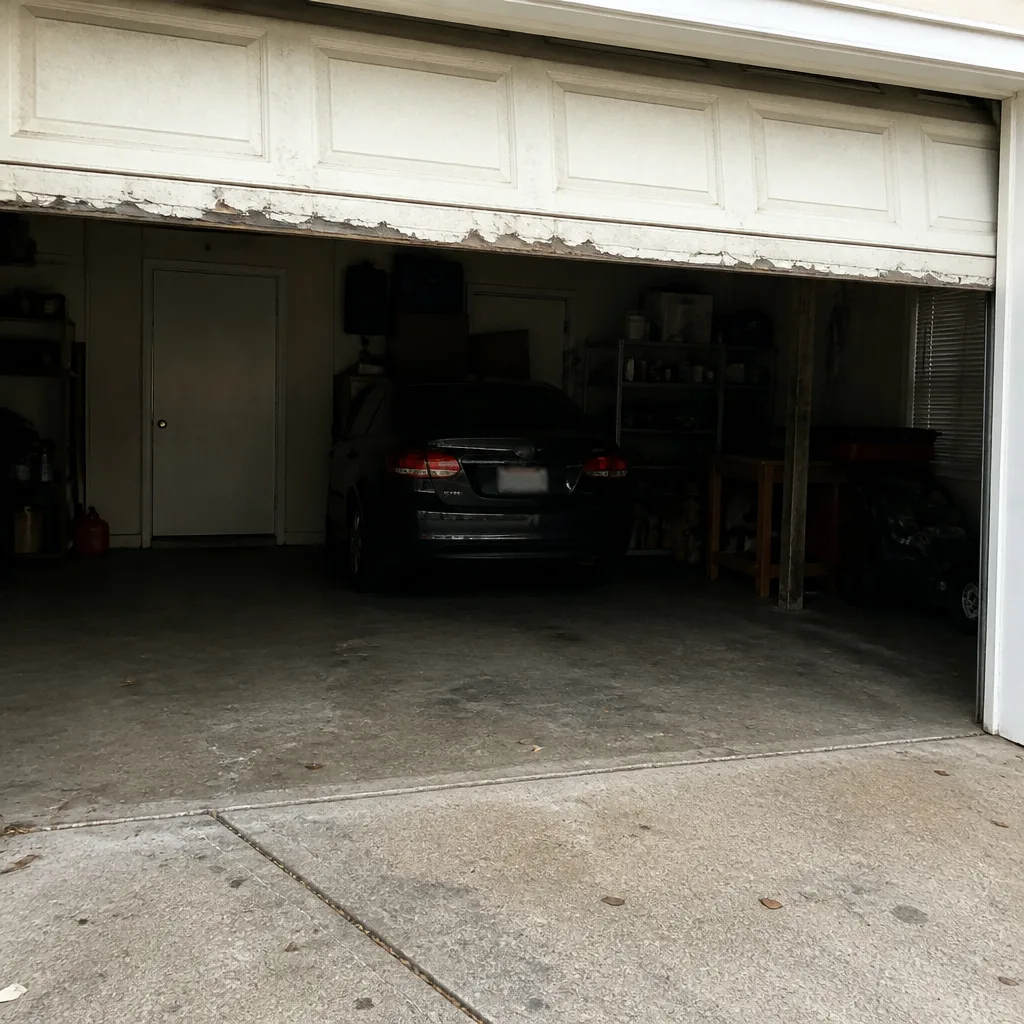 Before
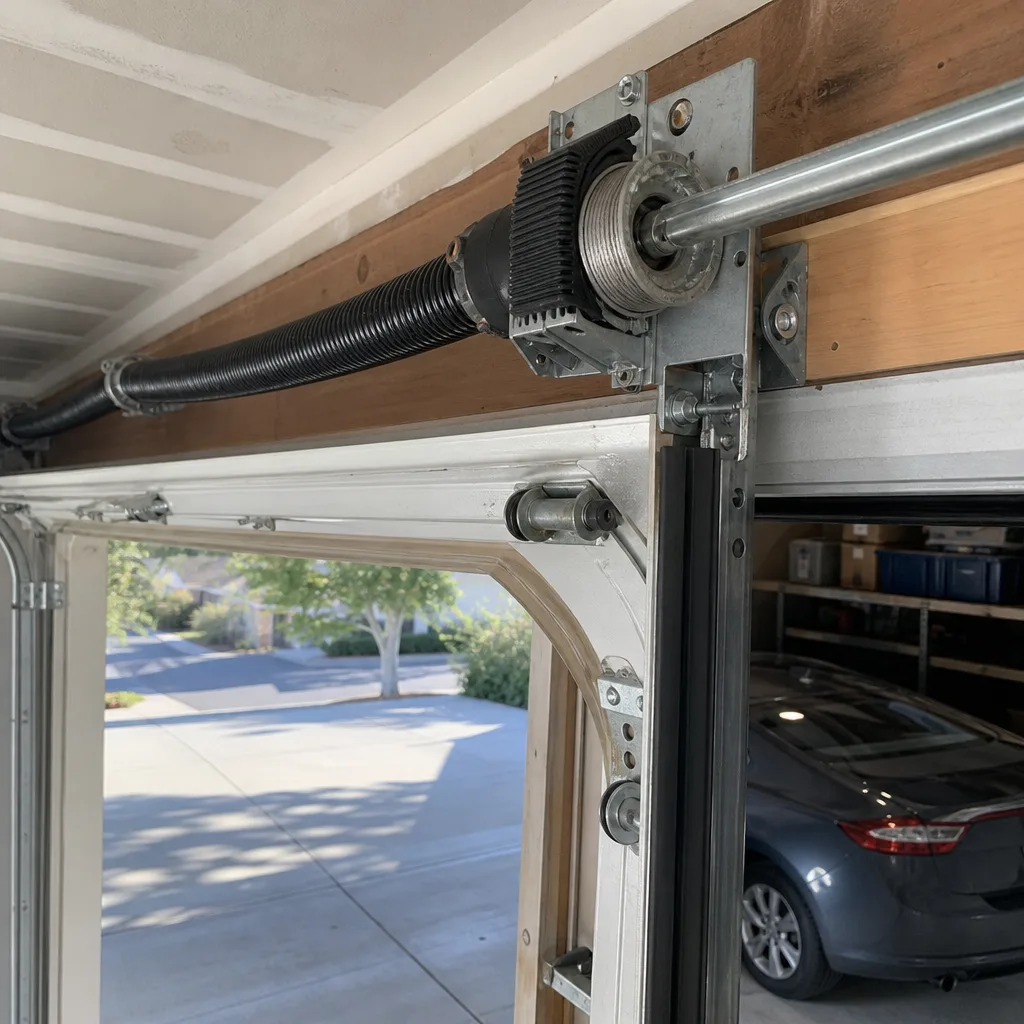 After
After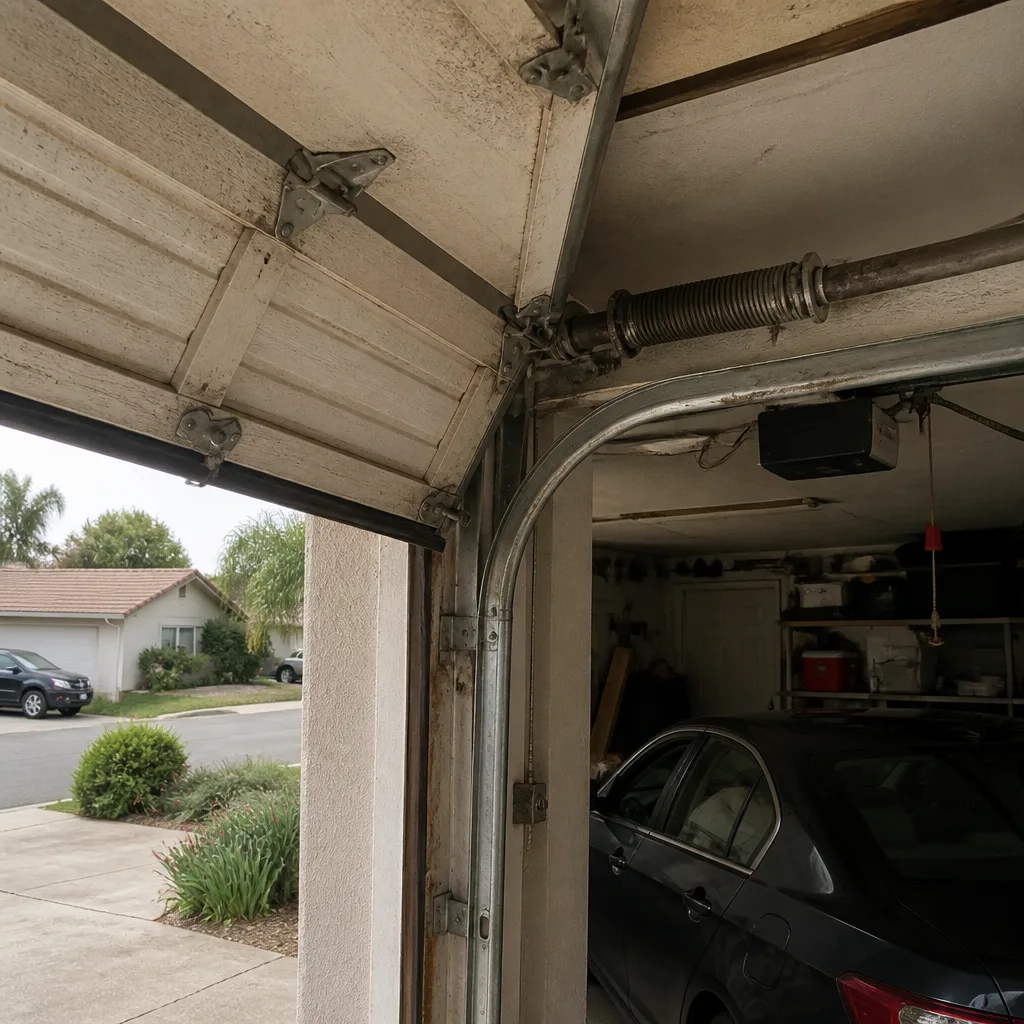 Before
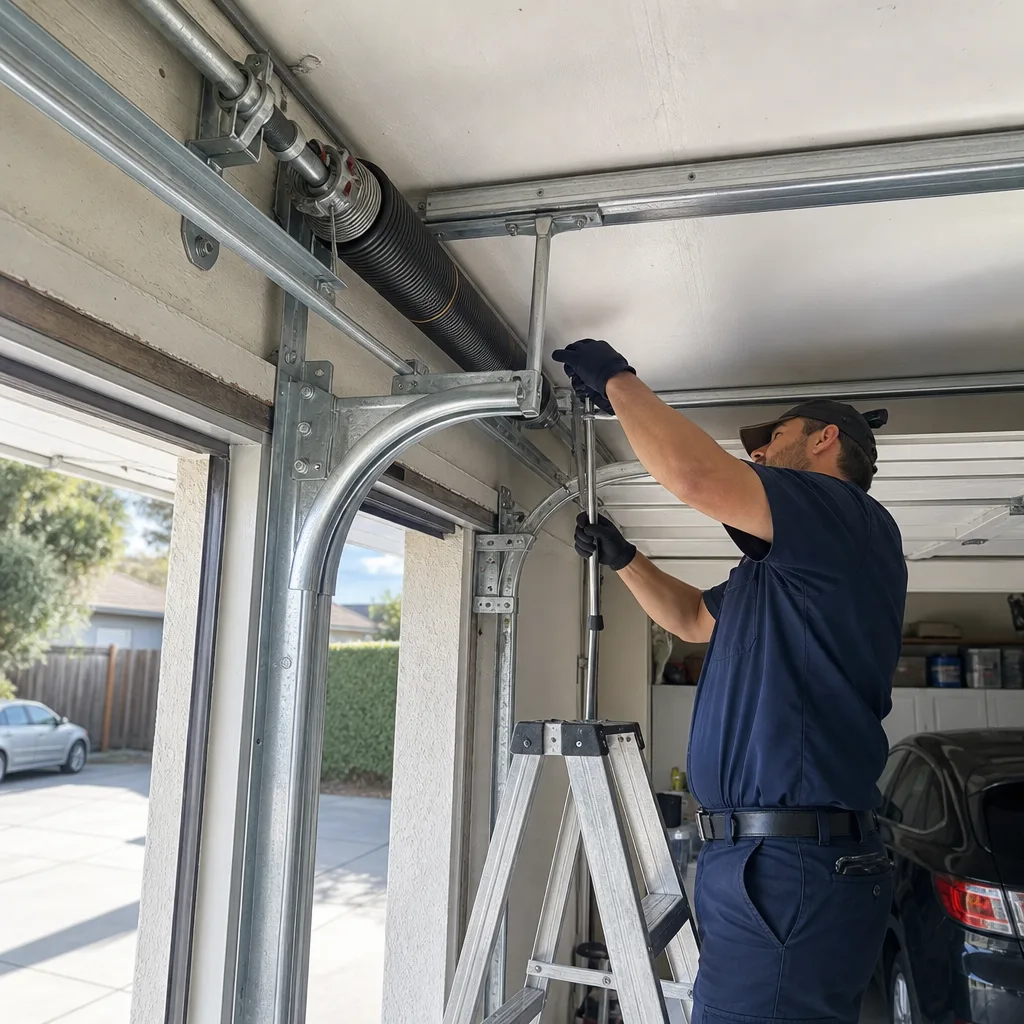 After
AfterGarage Door Permits, Codes & Inspections in CA: What You Need to Know
Here’s the part nobody tells you when you’re pricing a new garage door in Vista: the door itself isn’t the only line item. A full replacement in San Diego County triggers a building permit, and skipping it saves you a couple hundred dollars today and becomes a five-figure liability when you sell. We’ve walked into garages all over Vista where the previous owner “saved” on permits, and the current owner is the one holding the bag at escrow. This guide walks you through what actually requires a permit, what the inspector checks, what Title 24 energy code means for your door, and how to confirm the permit exists before you hand over a deposit. For more guides & resources, visit our blog.
Quick Answer
In California, a garage door replacement (removing the old door and installing a new one) requires a building permit through the City of Vista’s Building Division, while a repair like swapping springs, rollers, or cables does not. The permit costs roughly $150 to $300 depending on the job value, and the inspection typically checks anchorage, bracing, and safety reversal systems. Skipping it becomes a problem when you sell the house, because unpermitted structural work shows up in disclosures and gives buyers a lever to demand a credit.
Table of Contents
- When a Garage Door Job Needs a Permit in Vista
- What the Inspector Actually Checks: The Three Physical Things
- California Title 24 and Garage Doors: What “Compliant” Really Means
- How Unpermitted Garage Door Work Shows Up When You Sell
- How to Verify Your Contractor Actually Pulled the Permit
- What a Permitted Garage Door Replacement Costs (Permit Included)
- Why Vista’s Climate and Soil Matter for Garage Door Code
- Common Mistakes to Avoid
- When to Call a Professional
- Frequently Asked Questions
When a Garage Door Job Needs a Permit in Vista
Here’s the plain-language rule: if the old door comes off the tracks and a new door goes in, you need a permit. If you’re fixing what’s already there, you generally don’t. The California Residential Code (CRC), which San Diego County and the City of Vista adopt with local amendments, treats a garage door replacement as a structural alteration to a wall opening. That’s the same category as replacing a window or a sliding glass door.
What needs a permit in Vista:
- Full garage door replacement - old door out, new door in. Always permitted.
- Converting from a solid panel door to one with windows - the opener, bracing, and wind-load calculations change.
- Any modification to the door opening itself - widening, raising the header, moving the track mounting points.
- New door installation where none existed - this is structural, no question.
What does not need a permit:
- Spring replacement - torsion or extension, high-tension job, but not a permit job.
- Cable, roller, hinge, or track repair - these are maintenance on an existing door.
- Opener replacement or repair - the opener is not part of the building envelope permit requirement, though it does need to meet UL 325 safety rules.
- Weatherstripping, panel dents, and cosmetic fixes.
The gray area is when a door is so beat up that “repair” becomes a full rebuild. If we’re replacing four panels, new tracks, new springs, and new hardware, the City of Vista Building Division considers that a replacement regardless of what the invoice says. A contractor who calls it a “major repair” to dodge the permit is mislabeling the job, and you’re the one who carries that mislabeling. Know the Garage Door Warning Signs: A Vista Homeowner’s Reference Guide to spot red flags early.
For context, this is exactly the kind of work we handle at Garage Door Installation in Vista every week. The permit step is part of the job, not an optional add-on.
What the Inspector Actually Checks: The Three Physical Things
Most homeowners picture a city inspector with a clipboard checking thirty line items. In reality, when Vista’s building inspector comes out for a garage door inspection, they’re looking at three physical things. That’s it. Here’s what they are and why they matter.
- Anchorage and bracing. The inspector verifies the track brackets and the mounting points are fastened per the manufacturer’s spec and the code’s wind-load requirement. In Vista, we’re close enough to the coast that the code assumes wind exposure. Loose lag bolts, missing fasteners, or brackets mounted into drywall instead of framing gets a fail. The door is a 200-pound sail when the Santa Anas blow through; the code wants it anchored like one.
- Safety reversal systems. The photo-eye sensors at the base of the opening and the auto-reverse mechanism on the opener get tested with an actual obstruction. The inspector uses a 2×4 laid flat on the floor; the door has to reverse within two seconds of contact. This is federal law under UL 325 and it gets enforced in Vista during a permitted inspection. If the opener is older than about 1993 and doesn’t have these features, it gets flagged.
- Material and assembly compliance. The inspector verifies the door assembly matches what was permitted - size, material, and any listed wind rating. They’re not inspecting for beauty; they’re checking the thing you said you’d install is the thing that’s installed, and that it meets the state’s building standards for the opening it’s filling.
That’s the whole inspection. It’s a fifteen-minute visit if the work is done right. If it’s not, you get a correction notice and a re-inspection fee. The quickest way to pass is to have the door installed by someone who’s done it in Vista before and knows what the inspector is checking. We’ve been through this process in Vista since 2004, and Otto knows the inspectors by first name because he’s been standing in the same driveways for two decades. That’s not a corporate flex; it’s just what happens when the owner is the one doing the work.
California Title 24 and Garage Doors: What “Compliant” Really Means
California’s Title 24 energy code applies to new construction and major alterations, which includes a permitted garage door replacement under most circumstances. Here’s what it actually requires from your door in practical terms, not bureaucratic language.
U-factor and air leakage. Title 24 sets a maximum U-factor for the garage door when the garage is attached to the conditioned living space. U-factor is how much heat passes through the door. For attached garages in San Diego County’s climate zone, the ceiling above the garage is usually the thermal boundary, not the door itself. That means the door’s energy requirement is lighter than a front entry door, but it still exists. An insulated door with a polyurethane core typically meets the requirement without any special red tape.
When Title 24 doesn’t apply. If the garage is detached, the door is exempt from the U-factor requirement because there’s no conditioned space above it. If you’re repairing the existing door rather than replacing it, the code doesn’t re-trigger the energy requirement. And if the garage has a ventilated attic above it rather than finished space, the door’s energy performance matters less.
What “compliant” actually means. A door that is Title 24 compliant for an attached garage in Vista is usually an insulated steel door with a U-factor of 0.35 or better. Most mid-range doors from Amarr and Clopay already meet this without needing a specialty product. The compliance is documented on the permit application; the inspector verifies the installed door matches the spec. If the label on the door says it’s compliant and the permit says the same, the inspection passes on that item.
We see homeowners overthink this one. You don’t need a $4,000 sustainability-grade door to pass Title 24 in Vista. You need a labeled, insulated door that the permit application accurately describes. That’s it.
How Unpermitted Garage Door Work Shows Up When You Sell
This is the section that changes the math on that $150 permit fee. When you sell a house in California, the seller fills out a Transfer Disclosure Statement. One of the questions asks, in plain language, whether any work was done on the property without required permits. If you answer honestly, you’ve now disclosed unpermitted work to every buyer who walks through. If you answer dishonestly and the buyer discovers it later, you’ve committed nondisclosure and opened yourself to a post-close lawsuit.
But most of the time, the problem doesn’t come from the disclosure form at all. It comes from the home inspector. Home inspectors in Vista know exactly what a permitted garage door installation looks like. They look for the city inspection sticker on the door or the permit record in the county database. When they find a new door with no permit on file, it goes in the report. Then the buyer’s agent uses it as a negotiating lever.
Here’s what we’ve seen happen in real Vista escrows:
- Buyer demands a $2,000 to $5,000 credit to cover the “risk” of unpermitted work, even if the work itself was done correctly.
- Lender refuses to fund until the permit is retroactively pulled and the inspection passed, which often means opening up the installation.
- Buyer walks entirely, especially in a buyer’s market where they have options and don’t want permit headaches.
- Retroactive permit costs more than the original: you pay the permit fee, the re-inspection fee, and any correction work, and the seller is doing it under a deadline with no leverage.
The permit on a garage door replacement in Vista costs roughly $150 to $300 depending on job value. That’s the cheapest insurance policy you’ll ever buy on a house you plan to sell. And the city’s building records are public; any buyer’s agent can pull them in five minutes online. Ignorance doesn’t protect you. A permit does.
How to Verify Your Contractor Actually Pulled the Permit
You’d be surprised how many contractors say the permit is handled and then “forget” to pull it. By the time the job is done and they’re gone, you have a new door and no permit, and the contractor’s phone goes to voicemail. Here’s the verification step that takes five minutes and protects you completely.
- Get the permit number before work starts. Not a promise to pull one. An actual permit number. The permit gets issued before the first fastener comes off the existing door. If the contractor can’t produce it, the job doesn’t start.
- Verify it online. The City of Vista Building Division has an online permit lookup. Enter the address and the permit number, and you’ll see the record, the scope, and the status. If it’s not there, it wasn’t pulled. It’s that simple.
- Confirm the inspection date is scheduled. A permit without a scheduled final inspection is half a permit. The contractor should tell you when the inspector is coming and what to expect. If they won’t commit to a date, that’s a red flag.
- Get the final inspection sign-off. After the inspector approves the work, the permit record shows “finaled.” That’s the magic word. A “permitted” job that was never finaled is still an open permit, and it still shows up as a problem on a title search.
- Keep the record. Save the permit number, the final inspection date, and the contractor’s license number together. You’ll need all three at escrow. This is the difference between a smooth sale and a $3,000 credit to the buyer.
At Otto’s Garage Door, the permit is pulled before Otto or his crew shows up with the door. You get the permit number on your written estimate, and the final inspection is scheduled before the install is done. The name on the license is Otto Reinhardt, and the name on the invoice is Otto Reinhardt. There’s no third-party permit runner and no handoff to a back office. It’s the same set of boots in your driveway from estimate to inspection.
What a Permitted Garage Door Replacement Costs (Permit Included)
Here’s the real-world pricing breakdown in Vista right now, based on what we see on actual jobs. These are the numbers that get buried in most online guides.
- City of Vista building permit for a garage door replacement: $150 to $300, depending on the declared value of the job. This is a fixed city fee; the contractor isn’t marking it up.
- Inspection fees: usually included in the permit fee for the first visit. Re-inspections run $80 to $150 if the first one fails.
- Standard single-car door replacement, steel, non-insulated: $800 to $1,400 installed.
- Standard double-car door replacement, steel, insulated: $1,500 to $2,800 installed.
- Higher-end carriage-house or wood-look doors (Amarr, Clopay, Wayne Dalton lines): $3,000 to $6,000 installed.
- Opener replacement, if you’re doing it while the new door goes in: $450 to $850 including the unit and labor.
The permit is a line item on the estimate, not a surprise at the end. Every job at Otto’s Garage Door gets a written price before the work starts, and the number on that paper is the number on the invoice. The price is agreed before the door comes off the truck. If the job changes mid-stream because we find something unexpected, we stop and talk to you before spending another dollar. That’s not a policy from a manual; that’s how Otto has done business in Vista since 2004.
Why Vista’s Climate and Soil Matter for Garage Door Code
Vista sits in a specific microclimate that affects garage door installation in ways a generic national guide won’t tell you. We’re nine miles inland from the Pacific, which means marine layer mornings, dry afternoons, and Santa Ana winds in the fall. The code reflects that.
Wind exposure. Vista’s Building Division enforces wind-load requirements for wall openings, including garage doors. The closer your neighborhood is to the aeries along the San Marcos border or the open stretches near Shadowridge, the more anchorage the code expects. That’s why the inspector checks those lag bolts and track brackets specifically. A door installed in Ramona or inland Poway often doesn’t see the same wind, but Vista does.
Salt air and steel. The marine layer carries salt east from the coast, and it settles on everything. Steel doors with cut edges at the panel seams will rust at those edges in five to seven years in Vista if they’re not properly coated. That’s not a code issue; it’s a practical lifespan issue that affects whether your door still meets its wind rating when the metal gets soft. We recommend factory-finished doors from Clopay or Amarr for Vista homes for exactly this reason.
Soil movement. Vista sits on ancient alluvial fans and clay-heavy soils that shift with rain and drought cycles. Garage door openings move slightly over the years as the slab and foundation settle. The code’s anchorage requirements account for this; a door installed tight to an opening that hasn’t moved in twenty years will start binding and wearing tracks early. When Otto installs a door in Vista, he’s looking at the reveal on both sides and adjusting for settlement. That’s not in the permit application, but it’s why a locally installed door lasts longer than one hung by someone who doesn’t know the ground.
Common Mistakes to Avoid
- Assuming a spring replacement needs a permit. It doesn’t. You’ll find forum threads telling you it does, but the City of Vista doesn’t require a permit for torsion spring replacement. Don’t let a contractor charge you a “permit fee” on a spring job.
- Letting the contractor describe a replacement as a “major repair.” This is the most common permit dodge in the county. Four new panels, new tracks, new springs, and new hardware is a replacement. If it needs a permit, the invoice should say so.
- Skipping the permit because you’re not selling anytime soon. The permit record isn’t only for escrow. It’s also evidence you need if the door fails and you make an insurance claim. Unpermitted work is a common reason claims get denied or reduced.
- Believing the manufacturer’s warranty covers everything. A door warranty covers defects in the door, not the installation. If the door was installed unpermitted and an anchorage failure causes damage, the manufacturer will point at the installer and the installer is gone.
- Not checking the permit number before work starts. The verification step takes five minutes. The fix for not doing it takes weeks and thousands of dollars.
- Confusing a business license with a building permit. A contractor’s state license means they can legally do business. It does not mean the city has approved the specific work on your specific house. The building permit is the one that matters at inspection time.
- Throwing away the permit record after the job. Two years later, during escrow, the buyer asks for the permit number for the garage door. If you can’t find it, you’re paying for a building record search and possibly a retroactive permit. Keep the paper.
When to Call a Professional
Garage door work in Vista sits in a strange category. Some of it is genuinely DIY-reparable: tightening a hinge screw, replacing weatherstripping, lubricating rollers. And some of it is genuinely dangerous: torsion springs under load, cables that anchor that 200-pound door, track realignment on a door that’s binding. If the job involves a spring, a cable, or any part under tension, call someone who does this every day. A torsion spring failure is the leading cause of garage-door-related injury in the United States, and the internet is full of videos that make it look easier than it is.
But the permit question makes a professional call even smarter. A licensed contractor who pulls the permit, passes the inspection, and stands behind the work with a written guarantee is the difference between a door that’s a selling feature and a door that’s a selling concession. Garage Door Repair in Vista is what we do, and we offer free estimates in Vista - call (760) 891-5938 for an exact quote. The price is quoted before the visit and it does not change at the door. That’s the way Otto’s done it for two decades, and the name on the invoice is the same name that’ll answer when you call back in a year.
Frequently Asked Questions
Yes, a full garage door replacement requires a building permit in California, including in Vista. A repair like spring or cable replacement does not require a permit. The permit is issued by the local building department, costs roughly $150 to $300 in Vista, and requires a final inspection. Call (760) 891-5938 for help with the permit process - estimates are free.
The city can require you to retroactively permit the work, pay a fee, and open up the installation for inspection - and the issue will surface again if you sell the house. In Vista, a home inspector or buyer’s agent can pull the permit history in minutes and use an unpermitted door as a negotiating lever. Call Otto’s Garage Door at (760) 891-5938 if you have an unpermitted door and want to get it squared away before listing.
A garage door replacement permit in Vista typically costs between $150 and $300 depending on the declared job value. Re-inspections, if the first inspection fails, run an additional $80 to $150. The permit fee is a fixed city charge, not something your contractor should be marking up. Call (760) 891-5938 for a written estimate that includes the exact permit line item for your address.
A California garage door inspection checks three physical things: anchorage and bracing of the track hardware to the wall framing, safety reversal systems including photo-eye sensors and auto-reverse on the opener, and material compliance with what was listed on the permit application. The inspection typically takes fifteen minutes if the work was done correctly. We can walk you through what the Vista inspector will check - call (760) 891-5938.
Title 24 requires an insulated garage door when the garage is attached to conditioned living space and the door is being permitted as part of a replacement. Detached garages are generally exempt. A compliant door in Vista is usually an insulated steel door with a U-factor of 0.35 or better, which most mid-range Amarr and Clopay doors already meet. Call (760) 891-5938 for a recommendation that fits your specific garage.
You can, but the permit still applies, the inspection still happens, and springs under torsion are genuinely dangerous if you don’t know what you’re doing. A DIY door that fails the inspection costs you the re-inspection fee and the same correction work a contractor would have avoided. For opener issues specifically, see Garage Door Opener in Vista - that’s the page that covers how openers and safety sensors interact with the code. Call (760) 891-5938 if you want a professional install with the permit handled.
The Bottom Line
The permit on a garage door replacement in Vista is the smallest check you’ll write on the whole project, and it’s the one that protects you the longest. A permitted, inspected, properly documented door is an asset when you sell. An unpermitted one is a problem waiting for an escrow to find it. California code isn’t trying to make the job harder; it’s keeping that 200-pound door anchored to your house in a Santa Ana wind and making sure the reversal system stops before it hurts someone. Pull the permit, verify the number before work starts, keep the final inspection record, and you’ll never have to think about it again. If you’re in Vista and want the permit handled by someone whose name is on the license and the invoice, Otto’s Garage Door will quote your job over the phone and hold that number at the door. Call (760) 891-5938 for a free estimate. And if you want a broader look at what we do before you call, start at Otto’s Garage Door home.
Written by Otto Reinhardt, Owner at Otto’s Garage Door, serving Vista since 2004.